This work studies a selection of Joyce Carol Oates’ anthology The Oxford Book of American Short Stories. The aim is to analyse the grade of implicitness present in American short stories throughout the last three centuries. Grice’s Relevance Theory and Bonheim’s Narrative Modes and Techniques of the Short Story have been taken as framework for the research.
The meaning of a piece of literature is more
than often not an obvious matter. It may lie hidden entwined in the characters
thoughts for the reader to detect or it may be just awareness on part of the
reader at a certain moment in the story, many times at the very end. This study
focuses on these hidden elements that affect intrinsic meaning, what linguists
call “implicatures”.
Implicitness in Short American Narrative
Introduction
On analysing Joyce Carol Oates’ The Oxford Book of American Short Stories as
the base for our study we encounter an outstanding selection of some of the
best and paradoxically least known American short stories. It was indeed, the
author’s intention to gather them in a collection, finding unfair that many
such an interesting story should remain practically unknown to the general
public. Joyce Carol Oates acknowledges having chosen the stories bearing in
mind storytelling as an art as well as political or social themes rather than
literary experimentation. This study will focus on the implicit ways these
themes are conveyed.
Part I of this work is a foreword on the elements considered important in the analysis of implicitness, in other words concepts relevant to our study such as implicature, explicature or narrative modes that have largely puzzled the erudite mind. Part II is entirely dedicated to the study of Implicitness under the umbrella of the distinct narrative modes and of the Relevance Theory. The Conclusion aims to outline the basic trend American short stories have followed since the eighteenth century concerning the grade of implicitness the writers pervade their literature by.
Part I – An approach to relevant
terms
Much has been written on Relevance
Theory, Implicatures, and Explicatures, but in general all linguists claim that
there is a distinction between the explicit content and the implicit import of
an utterance. Jim Meyer’s distinction in his article What is Literature? A Definition based on Prototypes is a relevant
one to bear in mind:
In
pragmatics there is an important distinction between ‘explicatures’ and
‘implicatures’ in understanding the meaning of a text. An explicature is the semantic
representation which is present in the linguistic cues of an utterance; an
implicature depends on the explicatures (the propositions which are expressed)
together with the context.
Jim Meyer makes some interesting quotations
from Diane Blakemore’s Understanding
utterances:
Speakers do not always intend to
communicate a specific set of assumptions: sometimes the speaker’s intentions
are less determinate so the hearer is simply encouraged to think along certain
lines without necessary coming to any specific conclusion (1992.168).
Every hearer (or reader) is guided
and encouraged by the text in the sense that it gives access to contextual assumptions
which yield implicatures…A creative hearer is encouraged to take a greater
share of the responsibility in the interpretation process, so that the extra
effort she invests is rewarded by a wide array of very weak implicatures, which
she is encouraged to explore (1992:172).
It is these ‘weak implicatures’ that
we intend to analyse as well as the way the writer may violate many of the
maxims Grice’s Cooperative Principle suggests as unequivocal to communicate
accurately under the four categories. Namely: under Quantity: be as informative
as required, do not be more informative than required; under Quality: make your
contribution one that is true, do not say what you believe to be false, do not
say that for which you lack adequate evidence; under Relation: be relevant; under
Manner: be perspicuous (avoid obscurity of expression, avoid ambiguity, be
brief and be orderly).
The violation of these maxims may
give place to what Meyer called ‘weak meaning’ or ‘weak implicatures’, meanings
which are present but which are less strongly present and that, sometimes,
combined with several other weak meanings may provoke in the reader the poetic
effect. Meyer also quotes Blakemore on the definition of the poetic effect “the
effect of an utterance which achieves most of its relevance through a wide
array of weak implicatures” (Blakemore 1992:157). For Meyer then, a
prototypical literary work contains many weak implicatures, so that the readers
are invited to think of many propositions which are only weakly present.
Two other terms that may deserve a
previous word are those of ‘short story’ and ‘narrative modes’. And in a way
the latter will help as a tool to understand the former. It is very difficult to define ‘short story’
most of all when it is still in midst of its development. Ian Reid tell us in The Short Story that we have to start
defining ‘story’ and only then continue with ‘short’, afterwards analyse its
evolution from the tale and note the impulse Romanticism gave to the genre
acknowledging :
..that the short story typically
centres on an inward meaning of a crucial event, on sudden momentous
intuitions, ‘epiphanies’ in James Joyce’s sense of that word; by virtue of its
brevity and delicacy it can, for example, single out with special precision
those occasions when an individual is most alert or most alone (1982:28).
Reid also points out in his fifth
chapter the ‘essential qualities’ of a short story, namely: unity of
impression, moment of crisis, and symmetry of design and, what is more,
questions their essentiality. It is not our intention to go into depth on these
matters, may they interest us as much as they do, but arrive to a close
definition which we can bear in mind while carrying out our research. For this
matter we find Joyce Carol Oates’ personal definition the most relevant, being
hers the selection of stories we are to deepen in:
My personal definition of the form
is that it represents a concentration of imagination, and not an expansion, it
is no more than 10.000 words; and no matter its mysteries of experimental
properties, it achieves a closure- meaning that, when it ends, the attentive
reader understands why..[..]..Its resolution need not be a formally articulated
statement…[..]..but it signals a
tangible change of some sort; a distinct shift in consciousness, a deepening of
insight. (7) [1]
James Joyce, Ian Reid,
Joyce Carol Oates, and many others, have realized that it was conflict and the
reader’s awareness of it all, no matter if suddenly experienced in an
“epiphanic” moment or through pages of swift consciousness, that generated a
piece of literature and therefore a short story.
Helmut Bonheim through his analysis
of The Techniques of the Short Story arrived
to the conclusion that some narrative modes have been more popular in one age
than in another. Bonheim starts his first chapter saying that “Even the
shortest of story forms, the anecdote, tends to use all of the chief modes of
narrative” (1992:3) which he later defines as description, report, speech and
comment. For Bonheim these four modes are “the staple diet of the short story
and the novel” (1992:3). But not in all ages the hierarchy of modes has been
the same:
“In our age speech stands high in
the esteem of most readers. Description is thought boring except in small
doses; comment of a particular kind, namely moralistic generalizing, is almost
taboo, even where imbedded in speech; and even report is preferred in the dress
of, or at least heavily interlarded with, speech.(1992:8)
Society’s tastes during a determined
period will be reflected in its literature and the study of short stories will,
no doubt, show us the same trend. For Bonheim a short story is:
“an amalgam, usually an unbalanced
one, of the four modes : whereas Irving’s story consists of description and
comment, these modes may be absent from stories written about a century later,
such as Katherine Mansfield’s “Theft”, which contains the other two modes
almost exclusively” (1992:14).
Part II – Implicitness in a
Selection of the Short Stories in Joyce Carol Oates’ Anthology.
In our days general literature
criticism believes that the writer should intrude as little as possible in the
reader, what Joseph Warren Beach called “exit author thesis” in The Twentieth Century Novel, Studies in
Technique (1932:14), but during the 18th and 19th century this was not so. The fashion then
indicated that the author could be very explicit in his comment and therefore
the most popular modes were report and comment.
Following a chronological order in
our selection, we first find Rip Van Winkle. Irving’s last sketch of his Sketch
Book has hardly got any speech at all – except for the middle part of the story
– but a lot of comment, description and report. Irving makes use of a series of pseudonyms
which act twofold: as a twinkle to the faithful reader, who will remember his
previous publicity campaign, and as a way to give his story authenticity. The
story is supposed to have been first told by Rip Van Winkle himself, written by
D. Knickerbocker as a true story and finally discovered by Geoffrey Crayon.
This introduction may also recall Cervantes’ introduction to Don Quixote where
he intends to assure accuracy. The interference of the writer is clear and very
characteristic of the time. The story itself starts with a long description of
the Kaatskill Mountains and with the author addressing
directly the reader: “Whoever has made a voyage up the Hudson, must remember the Kaatskill
mountains. They are a dismembered branch (……) At the foot of these mountains,
the voyager may have descried the light smoke curling up from a village” (18). What
further characterises the opening of this story is that the description will
not really be relevant to the plot, what would be considered out of place in a
modern story. Irving
continues his story with a report of Rip’s character and his falling asleep to
wake up twenty years later. It is only when he wakes up that the author’s
intentions come to surface. Towards the middle of the story, here also helped
with speech, Irving
reveals that Rip has awakened being part of a Republic and not a subject of the
King of England. In his quest for identity, Rip symbolises America’s own
quest; his divorce from the past may well be America’s denial of her British
past. There are very ‘explicit’ symbols like the sign on the tavern which had
been disguised as George Washington, but could still be identified by Rip as
“the ruby face of King George, under which he had smoked so many a peaceful
pipe” (27) The story ends with one of its many samples of humour and irony: “it
is a common wish of all henpecked husband [..] that they might have a quieting
draught out of Rip Van Winkle’s flagon”.(32)
William Austin, in his Peter Rugg,
The Missing Man, makes use of a similar strategy to put forward his tale as a
letter form Jonathan Dunwell of New
York to Mr. Herman Krauff and to reassure, therefore,
its authenticity. Austin, nevertheless, alternates report with speech and
comment making his story much more ‘modern’, although it has also got a lot of
explicit symbolism. This old yarn had been long told as a nursery tale and
later was forgotten for a long time. Austin
like Irving at
the end of the story includes a “Further Account of Peter Rugg by Jonathan
Dunwell” advocating for its veracity.
Here we find out that after having been running for years to find his
home, without being successful because he had defied Nature with his cursing,
he arrives to find his house burned and its land auctioned. The story is a
parable and as Irving’s
has also to do with Time. The Further Account finishes with an “explicit”
explanation:
Then spake a voice from the crowd,
but whence it came I could not discern. “There is nothing strange here but
yourself, Mr. Rugg. Time, which destroys and renews all things, has dilapidated
your house, and placed us here. […]..Your home is gone, and you can never have
another home in this world.” (61)
Both Irving’s and Austin’s tales are
about a subject that has always fascinated men: Time, though the way they make
use of it may differ in intention and in form.
The Wives of the Dead follows the
same line, starting Hawthorne
the story addressing the reader “The following story, the simple and domestic
incidents of which may be deemed scarcely worth relating..”(63) It directly
starts informing the reader of an incident that though it may seem
insignificant it had aroused interest and for some reason or other, and one immediately
hopes for the best. The comment and
report on the part of the author will continue all through the story embedded
even in descriptions of the sort: “Her sister-in-law was of a lively and
irritable temperament, and the first pangs of her sorrow had been expressed by
shrieks and passionate lamentation.” (64) The descriptions will leave little to
the imagination of the reader and almost no implicit elements will be found
throughout the story. On the other hand, it has, as almost all Hawthorne’s stories, a lot of moral content, especially
concerning the well-natured sisters-in-law who, believing each to be the only
one to have her husband alive, behave so unselfishly as to delay telling the
other in order not to make her suffer. The author is always very present even revealing
the thoughts of the characters in the form of direct monologue “My poor sister¡
you will waken too soon from that happy dream,” thought Mary”.(68) What strikes,
for the first time in the story to the 21st century reader is the
last paragraph which leaves the final outcome open, “Before retiring, she set
down the lamp and endeavoured to arrange the bed-clothes, so that the chill air
might no do harm to the feverish slumberer. But her hand trembled against
Margaret’s neck, a tear also fell upon her cheek, and she suddenly awoke.”(68) This
paragraph also supplies an example of “implicature” with this tear that also
fell, telling us that in her anxiety the young wife had also wept. We are left
to imagine the following development of the scene leading towards the final
discovering on the part of both sisters-in-law that the other knew of their
husbands being still alive, or, as a more suspicious reader may suspect, one of two informers could not have told the
truth and the story could lead elsewhere had it been written. A final word can
be said on the last “she awoke”. Could it not have been Margaret, but Mary? She
might as well have been dreaming.
If we turn to Herman
Melville and his The Paradise of
Bachelors and the Tartarus of Maids, we encounter a prose that sounds much
more familiar to the modern reader. To start with the story breaks out with an
initial “It” that the reader will not fully understand until the end of the
second long paragraph, thus violating one of Grice’s maxims, and making the reader
keep on with curiosity: “It lies not far from Temple Bar. Going to it, by the
usual way, is…” (70) The reader will also be intrigued about this ‘usual way’
which he is supposed to recognise. The technique was not very much extended in
Melville’s time and it violates Grice’s Cooperative Principle maxim “Be
perspicuous” The story is full of implicit meaning. It was the beginning of
industrialization which, as it stood, was against the incipient democratic
principles and Melville denounces it in the story. The two parts of the story
represent the two worlds: the wealthy capitalist class that produced nothing
and just lived an empty life “of quiet absorption of good living, good
drinking, good feeling and good talk” (76) – a men’s world and heaven – embodied
by the Bachelors- and the other, the maid’s world and hell which incarnate
wooing maids, young girls chained to a machine that dehumanize them and make
them as white as the paper they manufacture. With this paper the lawyers will
earn their money, bachelors will abuse maids, capitalist will control workers.
The way the story is narrated, almost as if it were two different stories, is
revolutionary for the time and indicates the gap between the two social
classes. It may even indicate a feminist defence on the part of the writer “The
girls,” echoed I glancing round at their silent forms. “Why is it, Sir, that in
most factories, female operatives, of whatever age, are indiscriminately called
girls, never women?”(89) For the bachelor that governs them women must be like
“mares haltered to the racks” and not allowed to have children or husbands that
would only disturb them. Their forms are silent, unable to fulfil their natural
development. The guide lad, Cupid, relates it all to the visitor, as if it were
joke on the part of the writer on the interrelation man/woman. The final
exclamation: “Oh¡ Paradise of Bachelors and Oh¡ Tartarus of Maids” (90) unites
both worlds in the character’s mind giving them their real importance,
realizing that the paradise he earlier praised was on account of the hell of so
many. It is what modern criticism would call an ‘epiphanic’ moment.
Edgar Allan Poe’s mad character in
the Tell-Tale Heart begins addressing in the first person the reader as if in a
conventional chat: “True¡ nervous, very, very dreadfully nervous I had been and
am; (….) You fancy me mad. Madmen know nothing. But you should have seen me.” He
will continue trying to convince the reader he is not mad and by the mere fact
of doing so and telling how he killed the poor old fellow, because he could not
get rid of the look of “his Evil Eye”, he convinces the reader of the contrary.
Poe creates the ambiance and masterly
leads the reader to the final outburst of madness by means of a continued insight
of the character’s mind. The mind of a man or a woman, we do not know because
Poe uses “I” or “me” that is driven mad by the fear of the power of an evil eye
which he finally cannot escape.
The Storm is a master piece by Kate
Chopin which leaves little for the reader to imagine. It is one of the most
explicit stories of marital deceit with a happy ending in the story of American
literature and, what is more, with no sense of treachery on the part of the
actors. “The generous abundance of her passion, without guile or trickery, was
like a white flame which penetrated and found response in depths of his own
sensuous nature that had never yet been reached”.(133) The writer goes a bit
further stating that it was her flame that penetrated him and taught him what
he still did not know. In a time, when women had to be aloof from all sexual
desire, not to say of the actual knowledge of sex, The Storm could not have been but ignored by all publishers as it
actually was. The metaphor of the storm depicts Calixta’s passion which when
put off leaves her feeling even a better wife. Both couples are explicitly told to be at ease
at the end of the story: “So the storm passed and every one was happy.”
The Yellow Paper by Charlotte Perkins Gilman may be considered the opposite of The Storm if we discuss implicitness.
There is so much implicit that still nowadays the story is being analysed and
interpreted on different levels, namely psychological, sociological or
feminist. There is a lot to be interpreted. Only some examples are cited below.
From the very beginning, the narrator names herself only with pronouns: myself,
me, one, I. This has been interpreted by many authors as
a way to disguise her identity under a veil of anonymity which could include
many other women in the same condition. When the narrator uses her name, it is
only at the end of the story and in the third person when she has become the
other woman, the one which has escaped from the yellow paper and is addressing the
husband. “I’ve got out at last,” said I, “ in spite of you and Jane.(169) She is no longer Jane, she is “I”. The yellow
paper symbolises the oppressive situation many women lived in at a time, when
post-partum depression was considered an mental illness and women were
prescribed isolation and immobility by male doctors, which many times drove them
to real madness. Gilman depicts how a woman can finally get beyond the yellow
paper defying men’s power. ”And I’ve pulled off most of the paper, so you can’t
put me back¡” Now why should that man have fainted? But he did, and right
across my path by the wall, so that I had to creep over him every time¡”(169) In
the ending to the story it is the liberated woman that speaks, even if she is
on her hands and knees, she keeps creeping over the fainted man. Her husband faints because he cannot stand
her half disobedience, or because he cannot consciously accept not having full
power. The reader must make his own conclusions.
The Middle Years by Henry James is the story of an artist, a writer who achieves high
quality art when he is about to die and cannot accept not having a further
chance to continue with it now that it was finally in his possession. “The art
had come, but it had come after everything else. At such a rate a first
existence was too short-long enough only to collect material; so that to
fructify, to use the material, one should have a second age, an extension. This
extension was what poor Dencombe sighed for.” (174) James’ personal realism,
which depicted his character’s inner experiences not merely life as seen in a
mirror, works here very well. The writer by means of the character’s inner
thoughts will keep us informed of almost everything. There is little implicit
but we are taken by the hand of the author from beginning to end. Dencombe
laments his almost lost life very early in the story foreshadowing the last
sentences ”Frustration’s only life,”
said Doctor Hugh. “Yes, it’s what passes.” Poor Dencombe was barely audible,
but he had marked with the words the virtual end of his first and only chance.”
(189) This mixture of speech and comment on the part of the writer will close
an ending which otherwise would have remained a little more open and nearer to
21st century taste.
Even more explicit is Jack London’s In a Far Country where the author in his
celebrated two first paragraphs gives the reader a lesson of good behaviour
when leaving the well-known domestic world to venture into the unknown natural
world “For the courtesies of ordinary life, he must substitute unselfishness,
forbearance, and tolerance.” Making use of report and comment Jack London will
lead the reader till the end of the story where both characters kill each other
after incurring in almost every capital sin. There is very little speech, just
some thought in the third person narrator:
Well he would have company. If
Gabriel ever broke the silence of the North, they would stand together, hand in
hand, before the great White Throne. And God would judge them, God would judge
them¡
Then Percy Cuthfert closed his eyes
and dropped off to sleep.(205)
Old Woman Magoun by Mary E. Wilkins (Freeman) has relatively more speech than report or
comment. It is a cry in favour of women and mostly coloured women. “The
weakness of the masculine element in Barry’s Ford was laid low before such
strenuous feminine assertion” (207) The
reader of the story – if not familiar with the author’s tales – will not know
but for the language used by Old Woman Magoun that she is a coloured woman.
Neither is he told that Lily is the daughter of a black woman and a white man.
It is nevertheless implicit “She’s got a
good color” said Sally Jinks…(…)…”I know she’s got a beautiful color,” replied
Old Woman Magoun, with an odd mixture of pride and anxiety, “but it comes
an’goes.” (210) The beautiful colour and the mixture of pride and anxiety
implies all the horror that lies under the life of a mulatto girl (though we
are made aware of her blondness) whose grandmother knows better than let her
grow up because she foresees an unlucky destiny in the hands of a loathsome
white father. The episode of the berries which on the way to Greenham Lily is
forbidden to eat foreshadows the final outcome as, later on, on the way back
after having been denied the adoption which could have been the only salvation,
the girl is almost induced to eat, though in a silent manner. The author does not explicitly tell us what
is in Old Woman Magoun’s mind, but she leaves it very clear with the single
sentence “Come” she said, “it is time we were going. I guess you have set long
enough.” (221) The girl has had enough poisonous berries and she will be freed
from her terrible destiny of being given away as payment for gambling debts.
While getting closer to our time in
our chronological journey through the anthology, we begin to encounter more and
more implicit literature, less comment, more speech, and increasingly more
ordinary characters who, notwithstanding, will in their quest for identity
experience what any human being is deemed to experience: conflict and a moment
of illuminating awareness. Often these characters will feel that life is an
endless abyss of nothingness. On this line Ernest Hemmingway’s A Clear Well-Lighted Place is one of the
best examples of economy of words and comment but of profound enlightening on
the eternal dichotomy between the young and fearless man and the more mature
and sadly knowledgeable man who has finally realized there is “nada : pues
nada” (299) to pray for. Hemmingway uses only two short paragraphs, the first –
a description – and a middle one, in the form of interior monologue, to give
the reader some explicit clues on the characters’ thoughts. The rest – mostly
speech – serves to depict masterly the two worlds.
In The Strength of God, Sherwood Anderson’s Presbyterian minister also
experiences this moment of sudden awareness that functions as a high-pressure
valve through which all the repressed sexuality will give way to the appearance
of God in the form of a naked school-teacher kneeling on a bed. Basically the
story contains report and comment and the repressed thoughts of the only
character. It is not until the end of the story that he addresses a second
character, George Williard, to tell him how God gave him the strength to smash
the window through which he spied the woman. But this second character will not
utter a single word in response:
“I have found the light” he cried.
“After ten years in this town, God has manifested himself to me in the body of
a woman.”…..(….)..I am delivered. Have no fear…(…) “I smashed the glass of the
window,” he cried. “Now it will have to be wholly replaced. The strength of God
was in me and I broke it with my fist”. (263)
F. Scott Fitzgerald mastered another
character-maybe because he had had the same suffering- who felt lost in the
abyss of a wasted life. An Alcoholic Case
shows two characters that though sympathising one with the other are jointly
incapable of beating death. Death appears in a corner of the room, and both the
nurse and her ‘case’ feel it. ‘..she
knew that death was in that corner where he was looking’.(309) Discouraged the
nurse will explain, the day after, to her boss ‘It’s not like anything you can
beat’ …(…)..it’s so discouraging –it’s all for nothing”.(309) Once again there
is ‘nothing and then nothing’. With the use of ‘it’ and ‘anything’, of undetermined
intrinsic meaning, the author implies that which the nurse is not able to put
into words but the reader will perfectly grasp, thus violating all of Grice’s
Cooperative Principle maxims.
William Faulkner, the most original
writer of his day, almost re-invented fiction. He’s marvellous technique
enhanced him to talk in the voices of every kind of character. In That Evening Sun the eternal tragedy of
black people in the States is shown indirectly through the voices of the
children of a white American family (its member will appear again in The Sound and the Fury published later).
Through the incoherent chattering of the smaller children and a couple of
assertions on the part of the father and Quentin, his nine-year-old daughter
and first person narrator of the story, we learn the details of a frequent case
of abuse to black women by white powerful men. Jesus, the black woman’s husband
takes revenge in the person least guilty but most accessible: Nancy, his wife. “I
just a nigger. It aint no fault of mine”.(350) Nancy’s moaning has all the tragedy implicit.
She is not to blame but just accept her fate. After leaving Nancy alone in her cabin waiting for her
destiny, Quentin’s question clears the reader’s doubts: “Who will do our
washing now, Father?” I said. The matter is already settled and now the family
has to look forward to their immediate needs, even a nine-year-old is aware of
it. Faulkner mastered the economy of words and this “who?” is not questioning
but really answering.
Richard Wright, less innovating but
as reaching, depicts in The Man who was
almost a Man another tragedy another black abuse. The reader together with
the character, a fifteen-year-old black boy, will realize simultaneously at the
time of hearing the sound of a train approaching, that the boy had been cheated
into a-two-year slavery: “Two dollars a mont.
Les see now…Tha means it’ll take bout two years. Shucks¡ Ah’ll be dam¡” (383) The
reader is left running away with the boy after catching a train “away to
somewhere, somewhere where he could be a man”.(383) Here, once more in literature, an indefinite
pronoun stands for the staple of modern society.
It is no coincidence that the first
chapter of another memorable book starts: “It goes a long way back, some twenty
years. All my life. I had been looking for something, and everywhere I turned
someone tried to tell me what it was.”(441)
This is how Battle Royal, the
first chapter of Ralph Ellison`s Invisible
Man, begins. Here we encounter another black writer, but essentially the
same character running after his identity and after success. Ellison’s
character, does not have a name, he embodies all negro boys. The story is written
in the first person singular and the reader does not have a clear picture of
the narrator but the events narrated foreshadow what fate he will suffer. The anecdote
of his grandfather will also serve as a device showing the boy the way to
follow “Grandfather had been a quiet old man who never made any trouble, yet on
his deathbed he had called himself a traitor and a spy, and he had spoken of
his meekness as a dangerous activity” (442) The remembrance will haunt him all
his life and it is explicit at the end of the chapter in the form of a dream
where his grandfather writes “Keep This Nigger-Boy Running”.(445) He
acknowledges not having at the time an “insight into its meaning”. So the
chapter starts as it finishes with a search for identity and this endless
running after self-assurance.
Human eternal quest seems to have a
tragic ending in Ray Bradbury’s Three Will
Come Soft Rains. It is a terrible future of nuclear war that mankind should
avoid. There are many interesting features in the story as personification to
describe the house’s actions, that
continues to function as if nothing had happened. The house is afraid, though, and that fright
is reasonable because the family is gone though “their images burnt in wood in
one titanic instant” (458) can yet been seen. The writer does not inform the reader
immediately of the facts but goes little by little drawing the picture. The
title of the story, the poem chosen by the house to be said –not precisely at random – parallels the story
up to the final outcome: “And no one will know of the war, not one will care at
last when it is done. No one would mind, neither bird nor tree. If mankind
perished utterly” (460) It is precisely the falling of a tree that will cause
the final disappearance of the house under the fire. Then everything collapses and leaves us one last
voice “Today is August 5,
2026, today is…”(462) and hoping it would not be premonitory.
For the last part of the anthology
Joyce Carol Oates selected several stories by contemporary writers, many of
which belong to ethnic or social minorities, that have progressively had more
and more echo in society and whose vindications are conveyed in their
literature masterly and growingly elliptically.
Leslie Marmon Silko is one of them
and Yellow Woman one of her best
stories. As many of her contemporary writers, she does not openly speak in her
literature but her message is implicit in depths in her stories. Hers is the
voice of many Native Americans and it brings up issues of personal identity,
cultural identity, and genre identity. The story is told in the first person
singular and the narrator loosens herself to gradually believe she is Yellow
Woman, part of myth and tradition and therefore free to live her sensuality
without guilty feelings. But there is much more to the story if closely
studied. With the frequent mention of dampness, heat, warmth in connection with
the narrator’s senses, the author is linking Mother Creator with her siblings. “My thigh
clung to his with dampness…[…]…I cleaned the sand out of the cracks between my
toes…[…]…I felt hungry…” (592) The land and the woman are all one, the narrator
begins to feel part of tradition too, she wonders “if Yellow Woman had known
who she was…[…]..Maybe she had another name. (493) Later Silva will tell her “ But some day they will talk about us, and
they will say “Those two lived long ago when things like that happened.” (595)
“Stella, cold, cold, the coldness of
hell” This is the beginning of Cynthia Ozick’s story The Shawl. This seven words foreshadow the hell to be lived by the
main character, Rosa , as well as depicts the
character of Stella, her condition of being terrible cold and the ultimate
reason of Rosa’s child death. The title of the story the ‘shawl’ also
functions as a symbol: it will first serve to hide Magda – Rosa’s
baby – from the Nazis and later stop her from screaming when she actually
watches the child die. In the story we first encounter coldness, naked, harsh
words but gradually the author will impregnate them with a poetic scent “All at
once Magda was swimming through the air. The whole of Magda travelled through
loftiness.” (605) The words describe the instant previous to the child’s death
against an electrified fence in a Nazi concentration camp. How else could it be
beared?
David Leavitt’s Gravity has lots implicit in the title too. Gravity is what has to
be beaten to prove human consistency. There is no direct reference to AIDS in
the story nor to HIV+ but it is very well implied as for example in the
incident of the two salesmen who refuse to shake Theo’s hand. The title is echoed in “It seemed Sylvia had
been looking a long time for something like this, something heavy enough to
leave an impression, yet so fragile it could make you sorry.” The
impression would be left, not only in Bibi but also in Theo who will
realize that – no matter what – he could still mark a difference, impose his
being and by doing so help both his mother and himself to “win some small but
sustaining victory” (745).
Today’s writer has no other choice
than to provoke with literature sudden revealing moments, epiphanies, ‘titanic
instants’ because today’s conflicts are otherwise unspeakable; perspicuousness
too flat.
Perspicuous writing is also too
limited for Sandra Cisneros. Her stories, almost poems, are like photographed
instants, exquisite life portraits that elliptically tell us about Latino
community in North America and its terrible
circumstances. A house of My Own for
example, consists of only two paragraphs, one of them only a sentence “Only a
house quiet as snow, a space for myself to go, clean as paper before the poem”.
(749) and yet encompassing so many “weak implicatures”.
Finally, a word on Heat: our author’s own contribution to
her anthology. Oates expresses in the foreword to the story that “For the
author, the formal challenge of Heat
was to present a narrative in a seemingly acausal manner, analogous to the
playing of a piano sans pedal, as if
each paragraph, or chord, were separate from the rest” (607). She thoroughly accomplishes
the challenge. As J. Alan Rice noted in
his detailed study Chord Structure in
Joyce Carol Oates’ “Heat” (1995), Oates “means that the narrative has been
pared down to its essentials”. Her intention being to diminish it gradually
until it is understood as unique notes “without sustaining notes from one chord
to another” asserts Rice. “But the most important aspect of the structure of
“Heat” is that the final chord, that which the story is about, is missing.” Once again how could something as despairing as
the raping and murder of two girls else be told?
Conclusion
The success of a piece of literature
is parallel to its success in reaching each and every reader. The best way to do it will depend on the
artist’s expertise and sensibility. There are no predetermined rules and the
history of literature endorses it, but, many times, to convey meaning on part
of the writer or to apprehend it on part of the reader is no easy task; it
implies alertness on both sides. In
Joyce Carol Oates’ own words: “Because the meaning of the story does not lie on
its surface, visible and self-defining, does not mean that meaning does not
exist. Indeed, the ambiguity of meaning, its inner, private quality, may well
be part of the writer’s vision.” (8)
From the 18th century up
to our days storytelling has experienced notable changes. Far back in time have
the parables with moralistic comment been discarded. Detailed description and
lengthy report have also suffered a continuous metamorphosis evolving to more
and more succinct speech, at times only images, the meaning of which the reader
is merely invited to seize.
Notwithstanding this evolution,
nothing is definite. Storytelling is a long winding road; a multi-dimensional
road along which Society can trek, develop, progress and be substantially
represented while led in its eternal quest for identity.
Works Cited
Beach, Joseph Warren. The Twentieth Century Novel: Studies in
Technique. New York.
The Century Co., 1932.
Bonheim, Helmut. The Narrative Modes: Techniques of the Short
Stories. Cambridge.D.S. Brewer. 1992
Grice, H.P. Pragmatics: A reader. Oxford
University Press. 1991.
Meyer, Jim. What is Literature? A Definition Based on Prototypes. Work Papers
of the Summer Institute of Linguistics. University of North Dakota.
41: [33-42].1997.
Oates, Joyce Carol. The Oxford
Book of American Short Stories. Oxford
& New York
: Oxford University Press. 1994.
Reid, Ian. The Short Story. Methuen & Co. Ltd. New York. 1982.
Sent from Argentina : October 18 2019 Received : November 04 2019 Cover : Julien Blaine : Rep. éléphant 306 , 1962 Photo : Henry Ely / Inculding : Enzo Minarelli , John M. Bennett , Julien Blaine , Akenaton : Philippe Castellin et Jean Torregrosa , Bartolomé Ferrando , Clemente Padin , Giovanni Fontana , Hugo Ball , Bernard Heidsieck , Fernando Aguiar , Chiara Mulas , Anna Banana , Bill Picasso Gaglione , J.M. Calleja , Szkarosi Endre , … T.A.C. 42.292 Guy Bleus Archives : Silvio De Gracia / Hotel Dada Magazine / Argentina : # 000 013
DOCUMENTACIÓN:
PRODUCTOS
GRÁFICOS: MEDIOS IMPRESOS Y ELECTRÓNICOS EN ARTE POR CORRESPONDENCIA
El presente artículo es continuación de la edición
Número 118 – Agosto 2009, http://revista.escaner.cl/node/1454, dedicado a los Productos Gráficos: Medios Impresos y
Electrónicos en Arte por Correspondencia. Reseñaremos ejemplos adicionales
enviados a Postdata, clasificados como Productos paraeditoriales o ediciones periódicas y Productos extraeditoriales o Impresos editoriales
heterogéneos; que promueven la
utilización alternativa de formatos, procesos de producción gráfica y tecnologías
en la comunicación de arte por correspondencia.
Productos
paraeditoriales o ediciones periódicas
Heterogénesis,[1] Revista de Artes Visuales, es una
edición cultural periódica, miembro del Seminario Latinoamericano del
Departamento de Filosofía e Historia de las Ideas, Universidad de Lund, Suecia;
dedicada en el ejemplar del Año XII – Nr 45 – Octubre de 2003, a la temática
del Mail Art y encomendada a Elías Adasme, Networker y artista Chileno
residenciado en Puerto Rico quién trabajó como director invitado, incluyendo
artículos sobre Poesía Visual, Xerografía, Performance, Critica de Arte y Arte
Correo, entre los cuales mencionamos los siguientes: Arte Correo en
Latinoamérica: una apuesta por la utopía (Elías Adasme), Funtastic United
Nations: Por una creativa desglobalización de las culturas (Vittore Baroni), De
la alquimia del verbo a la estructura como crítica y metalenguaje (Jorge Solís
Arenazas), Conversación en red entre 2G´s (Gianni Simone y Guido Vermeulen), El
Arte Correo en el marco de la globalización (Clemente Padin), La globalización
de la utopia (Silvio de Gracia c/o Hotel DaDA), Arte postal y la poesía
experimental (Klaus Groh), Arte Postal – Células Cerebrales – Fractal (Ryosuke
Cohen), Xerografía: un recurso del arte postal en tiempo de globalización (Hugo
Pontes), Poesía Visual o el juego de las definiciones (César Reglero) y Arte
correo y poesía visual en México: una práctica todavía corrosiva (César
Espinosa).
Referiremos apartes de este último artículo, por:
«César Horacio Espinosa Vera, Mexicano, escritor, docente, poeta visual.
Creó y ha sido coorganizador de las Bienales Internacionales de Poesía Visual y
Experimental (1985-2009). Autor de libros y ensayos sobre poesía, arte,
política cultural y comunicación, uno de ellos en coautoría con Araceli Zúñiga
-La Perra Brava. Arte, y crisis políticas culturales, del cual una selección de
textos aparece en Ediciones Especiales, Escáner
Cultural.»[2]
Espinosa Vera, plantea una cronología de las prácticas
artísticas culturales que desde los años 70 y hasta mediados de los años
ochenta del siglo XX, se manifiestan como dos tendencias que aún hoy,
permanecen según sus palabras, […] «en estado subrepticio, disidente,
clandestino, a pesar de que cuentan con hondas raíces históricas y en su
desarrollo atravesó por todas las «vanguardias clásicas» en el mundo:
el arte-correo y la poesía visual»,[3] como propuestas de comunicación
paralela a la producción artística reconocida por el circuito de
críticos-galerías-instituciones en México y extensivamente en Latinoamérica.
[…] «En torno al primero, entre otras numerosas
definiciones existentes, cabe apuntar: Sería el arte-correo el que acabaría con
el privilegio desmitificador del «aura» del original al reproducir
masivamente, al sustraer el arte de la crítica, al demoler las contradicciones,
al democratizar la creación, al desregionalizarse como tránsito libre por el
mundo, al conciliar códigos, símbolos, grafismos, al crear interferencias
visuales hasta la saturación, al preparar la irreverencia paradiscursiva de los
«Paralamas del acontecimiento». [4]
[…] «Desde sus inicios el arte-correo ofrecía
los siguientes atributos, aún vigentes en lo básico:
I. Se trata de un diálogo a larga distancia, entre
personas que probablemente nunca llegarán a conocerse ni a intercambiar
palabras a viva voz. Esto rompe los parroquialismos, la estrechez de miras,
permite conocer otra circunstancia y otra problemática. Nutre la comprensión y
la solidaridad.
II. Correlativamente, se trata de un diálogo político,
ideológico, por la propia naturaleza del sistema. En cuanto sistema de
comunicación se interesa más por los problemas vivenciales y las circunstancias
de actualidad que por preocupaciones eminentemente formales y estilísticas. Si
bien posibilita desfogues escapistas, siempre significa una práctica ajena a
los códigos académicos o del mercado, lo cual favorece las capacidades de
autoexpresión como uno de los de los potenciales más productivos y corrosivos
del circuito. Esta característica resultó de especial importancia para enfrentarse
a regímenes dictatoriales, como los vividos en Latinoamérica, o sistemas
cerrados como los del «socialismo real».
III. Origina un proceso de descentralización
artística, cuando desde cada aldea o provincia se pueden enviar mensajes
creativos y ser conocidos o transmitidos hacia una multiplicidad de lugares, en
contraposición a los «centros» rectores del arte implantados desde la
segunda posguerra, donde una trama de galerías, museos, críticos y marchands
controla un cerrado aparato de mercadeo y «prestigio» que se
enseñorea sobre el arte universal. Con el arte postal deja de haber
«marginados» en la expresión y muestreo artísticos. Esto se potencia
ahora en los tiempos de Internet y el correo-electrónico».[5]
Periódico. Festival de la Interferencia, In Memoriam «Edgardo Antonio Vigo»
La publicación en formato Periódico que lleva por
título, Festival de la Interferencia, [6] Impreso por In situ Press, Estación
de Diseño y Producción Gráfica, reporta el encuentro Internacional de Arte de Acción,
realizado en las ciudades de Junín, Pergamino y Rosario del 25 al 29 de Abril
de 2007, organizado por Silvio De Gracia, In Memoriam «Edgardo Antonio
Vigo»; xilógrafo, pionero del Arte Correo argentino, artista conceptual,
del performance, poeta experimental, constructor de objetos, entre otros. Esta
edición realizada bajo el concepto editorial de impresión por demanda, es
decir, de tiraje limitado, como opción a las dinámicas comerciales del
periódico tradicional, órgano informativo cultural citadino que despliega
noticias de interés general.
El documento detalla el oficio curatorial de De
Gracia, incluyendo participantes que ejercen a la vez como artistas de acción y
corresponsales eventuales practicando indirectamente labores relativas al
oficio del periodismo, utilizando los géneros periodísticos o formas literarias
de manera informativa, de opinión e interpretativa; con artículos como: La
estética de la Perturbación (Silvio De Gracia), Los tejidos de la Performace
(Richard Martel), fragmentos de textos históricos de E.A. Vigo, de 1971, publicado
originalmente en la revista Hexágono’71, La Plata 1972, denominado, «La
Calle: Escenario del Arte Actual» y el titulado: «Un Arte
Contradictorio» (Declaración de 1968-69), adicionalmente, «La
performance desde la perspectiva Latinoamérica» por Clemente Padin.
Respecto al género periodístico literario que
corresponde a los editoriales y artículos de opinión, citaremos apartes del
editorial introductorio del periódico en cuestión y, por otro lado, un extracto
de la correspondencia electrónica con el autor del presente ensayo que expone
entre otras cosas los marcados intereses de, De Gracia, por la estética de la
perturbación o la interferencia, directrices a partir de las cuales concibe,
escribe y promociona sus eventos:
[…] «Pensemos que la interferencia es una
suerte de revulsión. Una revulsión que se produce en el artista y que se
exterioriza para buscar un interlocutor que, al menos de manera fugaz, tome el
riesgo de abstraerse del disciplinamiento social que se ha instituido en la
cotidianidad. Sacudir la inercia de la trivialización de los comportamientos
humanos es el objetivo. Pero esto no es para transformar la realidad, sino tan
sólo para crearle fisuras, abrirle intersticios, y «parasitarle» su
tejido racional y restrictivo. ¿Qué mejor forma de lograr esto que a partir de
la perturbación que se opera por las más diversas vías y estrategias: la
irreverencia, la ironía, la intromisión, la agresión, la apuesta lúdica, el
extrañamiento, la sorpresa, el delirio, el absurdo y toda forma posible de arte
insurreccional.»[7]
[…] «Te comento rápidamente que el eje
curatorial son las acciones urbanas (intervenciones, performances,
interferencias) que ejerzan algún tipo de efecto perturbador sobre la
cotidianidad… He apuntado a acciones que juegan en los bordes entre la
documentación y la videoperformance… pero en todos los casos se trata de
obras que han sido pensadas y desarrolladas en el espacio público con una
intencionalidad desestabilizadora…»[8]
Por otro lado y desde el contexto del producto
paraeditorial lo anterior connota un particular uso de este tipo de publicación
alternativa, no sujeta al acotamiento y en casos peores a la censura total del
comité editorial de turno de los medios tradicionales del periodismo local o
regional, aún el cultural, delimitado por las tendencias y políticas interinas,
que se yuxtaponen en este caso a un ejercicio periodístico alternativo, creando
«interferencias» al posibilitar de manera directa el análisis y el
ejercicio de libre opinión contribuyendo por otra parte a establecer parámetros
críticos por fuera de los intereses de la crítica de oficio, sujeta y
manipulada a su vez por los intereses económicos del oficialismo del arte
transnacional.
Productos extraeditoriales o
impresos editoriales heterogéneos.
Según Tena Parera, están conformados por un extenso grupo heredados del libro y de los
impresos editoriales periódicos; divididos a su vez por subgrupos según su uso
social en impresos eventuales, de presentación e identificación, de correspondencia,
administración, para el envase, embalaje y expedición, de información comercial
e industrial, papeles de valor, de fantasía, publigrafía y cartografía.
El Catálogo, es un impreso de información comercial e
industrial, en forma de folleto,
listando referencias, valores y descripciones sintetizadas de productos y
servicios. En arte, un catálogo se diseña de manera similar pero el objetivo
principal es el de promocionar obras plásticas o audiovisuales, con un marcado
acento en el diseño gráfico experimental, lo fotográfico como registro de obra,
una reseña crítica presentando el artista o colectivo y la imagen de identidad
institucional quién a manera de patrocinador presenta de forma temporal o
permanente una exposición, un evento, un proyecto, un certamen, etc.
En Arte Postal, generalmente un catálogo se compone de
una presentación introductoria institucional, una reseña critica o teoría sobre arte postal autorreferencial, de un directorio de artistas clasificados por
países y participantes, incluyendo la dirección postal, la dirección
electrónica y una selección de obras postales; utilizando diversos medios y
formatos para su publicación como el Offset, la xerografía, el afiche o póster,
la hoja carta, el acetato, la postal, el sobre-catalogo y la multimedia como
documentación del evento.
Ambassadors of the Artists Republic, International
Mail Art, Exhibitions & Conferences,[9] es el título del catálogo enviado
por el artista postal francés, Rémy Penard, documentando el acto protocolario
de la fundación de «La República de Artistas», tema de convocatoria
que sustentó además las exposiciones itinerantes de Arte Postal, video
conferencias y el taller sobre Sellos de Artista realizados en bibliotecas y
centros culturales, en la que se solicitó a los artistas postales que
manifestarán en sus mensajes que entendían por el concepto de «República
de Artistas». La siguiente nota de prensa incluida en el catálogo da
cuenta del acta de conformación redactada por sus autores.
«En noviembre de 1999, tres artistas de la región
de Limoges, Francia, el escultor Pierre Digan, el pintor Eugéne Chabreuil y el
Artista Postal Remy Pénard, se encuentran en un restaurante en el sitio
denominado como «El Campo de las Esculturas» (Le Pre aux Sculptures)
en el Lavergne cerca a St.-Martin-Chateau en el departamento de Creuse y
decidieron fundar una «República de Artistas» en ese lugar y
puntualmente se proclamaron sus embajadores. Los fundadores de esta
autodenominada «república» se amueblaron con los mismos medios para comunicarse
que el mundo del Mail Art, por correo, fax, e-mails y la red de manera tal que
contactaron mas de 1200 artistas de 54 países para fomentar los intercambios
con artistas internacionales en este terreno, Creuse, situado en el centro de
los intercambios de Francia, un lugar encantado en un mundo desencantado. Esta
parcela de 40 hectáreas, es frecuentemente visitada por artistas y será
inaugurada oficialmente el 14 de julio de 2000″.[10]
Aprovecho esta oportunidad para actualizar mi
declaración y/o participación que en esa ocasión fue de índole poética visual,
contestando a la pregunta ¿Qué opina usted del significado de una
«República de Artistas»?.
Rastreando algunos conceptos originales circulados en
la red de arte postal que oscilan entre la utopía y la realidad, entre otros el
de: «The Eternal Network» (Robert Filliou), «Funtastic United
Nations» (Vittore Baroni – Permario Cianni), o la siguiente frase citada
en el proyecto Web de Matt Ferranto, «mail art in not an artistic island.
it is a cultural peninsula», http://www.spareroom.org/mailart/mailart.html[11] encontramos de forma análoga enunciados que
expresan en su sintaxis experiencias de interacción relacionadas con ciertas
nociones y a la vez convenciones asignadas al concepto de territorio, nación,
sistema o red, al de cultura, prácticas artísticas, entre otras.
Adjetivos como eterna, divertimento fantástico,
unidad, artístico, cultural, califican a ideas de sistema o entidades como
Network (red de trabajo), naciones, isla, península, artistas y por extensión
al de «República», construcciones mentales que se enlazan para
connotar experiencias que emergen de la ficción o simulación de la realidad
como aspiración cultural de una interacción ética en un entorno sin
exclusiones.
Estas regiones imaginarias no son para nada una idea
utópica, es por tanto la confirmación de la sentida necesidad de establecer un
limite en algún territorio del planeta donde no halla división de clases y
exista más bien un consenso de valores, política, credo, costumbres y prácticas sociales, moral, etc.;
es decir, una confluencia cultural de actividades y correspondencia real sin
censura.
Portada Catálogo, Ambassadors of the Artist Republic. Rémy Pénard
Históricamente, el arte y sus ejecutores han creado e ideado en aras de revolucionar la institucionalidad artística un estanco donde discutir, proponer u oponer dialécticamente conceptos que debatieran el significado y la finalidad del arte mediante asociaciones, manifiestos, istmos, movimientos de vanguardia, neo vanguardia, siempre en constante secesión, debate, mutación y diálogo. La fundación de una «República de Artistas» autónoma, controvierte desde el punto de vista del Mail Art las características de «Tierra de Nadie» propia del arte oficial, una institución que termina por segregar a la gran mayoría, que no cumple por insuficiente su cometido, siempre corta de espacio, de presupuesto, ideología, política cultural, dependiente de viciados iconos y obras maestras para imponer su institucionalidad, que crea apartheid (Art is Apartheid)[12], segregación cultural, debido a lo pretendidamente hermético de su sistema, delimitando sus actividades a lo que el presupuesto o las partidas de dinero oficial, los fondos públicos, la empresa privada o los fieles mecenas les asignen para remozar y revivir su imagen cultural y paliar la agonía económica año tras año, exceptuando claro está, a las instituciones del primer mundo, que brillan por su inteligente administración y su gigantesca red de marketing consolidándose gracias a su bien calculado y estratégico negocio, sustentado por grupos de poder, accionistas, coleccionistas clásicos y el devoto público a quién no le queda otro remedio que consumir arte por nostalgia o por que el principio de realidad no le permite producirlo.
Como ilustración de lo anterior, presentaremos las
tarjetas postales clasificadas como impresos para la correspondencia, enviadas por Stephen Perkins,[13] artista postal
norteamericano activo en la red de arte postal desde 1984. Sus tarjetas nos
saludan con mensajes conceptuales directos y explícitos a la manera de un
retro-futurismo, como los siguientes: «museo de nada», «museo de
sueños», museo de desacuerdos», «museo de injusticias»,
«museo de lamentos», «un día sin artistas» o
«manteniendo mi respiración por la
paz», cuestionando el «Packaging
cultural», en relación con el punto décimo del manifiesto futurista
(Marinetti, 1909).[14]
Mapa Región. República de Artistas. Creuse-Francia. Rémy Pénard. Postcard. Eugénes Chabreuil & Rémy Pénard. Ambassadors of the Artists Republic at Vedéo Conférence of Mail Art Library Ussel – France (oct.02). Photo: Georges Chatain Museum of Dreams (Museo de Sueños) – Tarjeta Postal. Stephen Perkins. USA 2008 Museum of nothing (Museo de nada) – Tarjeta postal. Stephen Perkins.USA. 2008Museum of disappointments (Museo de desilusiones) – Tarjeta postal. Stephen Perkins.USA. 2008Museum of sin (Museo de culpa) – Tarjeta postal. Stephen Perkins. USA. 2008Museum of Regrets (Museo de lamentos) – Tarjeta Postal. Stephen Perkins. USA. 2008.A day without artista (Un día sin artistas) – Tarjeta postal. Stephen Perkins. USA. 2008Holding my breath for peace (Conteniendo el aliento por la paz)– Tarjeta postal. Stephen Perkins. USA. 2008Tarjeta postale. Stephen Perkins. USA. 2008
Yuxtapuesto al paradigma museo, presentamos el modelo conocido como EMMA, siglas de, The Electronic Museum of Mail Art,[15] cuyo director y guía es Chuck Welch conocido como Crackerjack Kid, escritor, artista postal, activo participante como trabajador de la red desde 1978. En 1985, Welch auto produce su libro «Networking Currents», permaneciendo como una publicación pionera acerca de los temas, problemas y la evolución de los artistas postales como Networkers (Obreros de la red); […] «analiza lo que denomina «Mail Art» como una forma de trabajo en red, y de esta forma lo que quiere extraer de cualquier contexto artístico que pudiera contaminar el proceso creativo de comunicación y del espíritu de comunidad que lo caracteriza.»[16] En enero de 1995, The University of Calgary Press, Calgary, Alberta, Canada; pública la edición denominada «Eternal Network: A Mail Art Anthology»,[17] la primera publicación editorial universitaria que explora las raíces históricas, la estética, y las nuevas direcciones del Mail Art contemporáneo en ensayos con referencias a prominentes artistas postales en los cinco continentes.
Podemos reseñar además desde EMMA los siguientes
aspectos claves de esta publicación antológica que dan cuenta de su producción
y pensamiento: el cuarto capítulo del libro ilustrado, examina el libre
intercambio y colaboraciones de la comunidad internacional para quienes los
buzones y los computadores reemplazan el museo, donde la dirección es el arte y
donde «el arte postal no son las bellas artes, es el artista quién es
bueno, excelente, fino, bello, etc.; «Whose mailboxes and computers replace
the museum, where the address is the art, and where «mail art is not fine
art, it is the artist who is fine» [18]
El libro presenta numerosas fotografías de artefactos
posteados, eventos performáticos, congresos, hojas de estampillas de artistas (Artistamps),
afiches, collages, libros de artista, poesía visual, arte computarizado,
revistas de arte postal, arte de la copia (Copy Art) e imágenes de sellos de
caucho artísticos; dividido en seis partes: Orígenes del Networking, Estética
abierta, Nuevas direcciones, Interconexión de mundos, Problemas comunicativos y
Reinos etéreos. Los apéndices incluyen direcciones de correo, exposiciones de
arte postal, un listado y locaciones de cerca de 350 revistas subterráneas de
arte postal y una comprensiva memoria de archivos internacionales públicos y
privados.
Eternal Network: A Mail Art Anthology Book,1995. The University of Calgary Press, Calgary, Alberta, Canada.[19]
Welch define a EMMA como el primer museo buzón electrónico donde la
dirección es el arte, la red es la clave y la entrada es libre, («EMMA is
mail art’s first electronic mail box museum where the address is the art, the
web is your key, and admission is free»)[20]
Los objetivos de EMMA son:
1. Introducir las comunidades de mail Art electrónico
y de superficie (Snail Mail Art) a cualquiera.
2. Desarrollar el concepto de e-mail Art o arte correo electrónico a través de
vínculos activos de correspondencia electrónica y Web sites.
3. Animar la interactividad del arte por correspondencia
electrónica a través de visitas dentro de las salas, galerías y librerías de
EMMA.
4. Promover el intercambio de imágenes. Los objetivos
de EMMA reflejan los esfuerzos en proceso para contactar las comunidades de
arte postal por fuera y por dentro del trabajo de vínculos en red a distancia o
Telenetlink [20] por correo electrónico y actualizando el directorio de
correspondencia electrónica.
Chuck Welch conocido como Crackerjack Kid, escritor, artista postal USA
Como contrapartida, el modelo de museo buzón
electrónico reduce la mega estructura del museo físico a su mínima expresión al
cambiar el arquetipo descomunal de su performance arquitectónica,
administrativa y comunicativa, por un espacio virtual, inmaterial, que aloja,
actualiza y distribuye la información gracias a la existencia del ciberespacio.
Los modelos se trastocan, museo, por museo buzón en
red, descentralizado, comunitario, global; la dirección es declarada arte, es
la entrada, el acceso libre a los datos del arte, con esto, se pasa de un
archivo de átomos, de costosa manutención, exhibición y alojamiento por un archivo
de proporciones binarias suspendido en discos rígidos diseminados y
direccionados por el planeta en servidores como esculturas tecnológicas
transitadas.
Esto es, comparativamente, los muros, las superficies,
los accesos, salas y volúmenes, etc.; son minimizados en clusters, micro
superficies distribuidas en discos rígidos, respaldo de la arquitectura
informática, programática y algorítmica que aloja las manifestaciones del arte
electrónico por correspondencia.
Por medio del diseño, la semiótica y la señalética visual, las interfaces gráficas nos dan acceso, lectura y tránsito a la red, cruce inmaterial por donde transitan los Cyber Networkers, con sus alias (nicknames), contraseñas (passwords) camino a sus buzones (mailbox), navegando a través de recursos nativos electro digitales como el hipertexto y la hipermedia para comunicar la tele correspondencia y agitar el intercambio de arte postal en red.
Compartimos las imágenes documentales de la importante donación de Mail Art de Ibirico, César Reglero y Valdor; y la firma de los contratos con la UCLM. Gracias de nuevo por su confianza en nosotros.
El Museo Internacional de Electrografía, Centro de Innovación en Arte y Nuevas Tecnologías (MIDECIANT) de la Universidad de Castilla-La Mancha (UCLM) amplía sus fondos con 5,000 piezas y miles de documentos complementarios del movimiento Mail Art de los artistas Ibirico, Reglero. y Valdor Con esta donación, este centro de la universidad regional amplía hasta más de 9.000 trabajos permanentes de arte electrográfico y digital. Las colecciones de Mail Art de los artistas César Reglero, Antonio S. Ibirico y Salvador Benincasa se agregarán a la colección del Museo Internacional de Electrografía, Centro de Innovación en Arte y Nuevas Tecnologías (MIDECIANT) de la Universidad de Castilla-La Mancha. (UCLM) Tras el acuerdo firmado hoy en el Campus de Cuenca por el Vicerrector de la institución académica, Manuel Villasalero, y los donantes de esta colección de alrededor de 5.000 piezas y miles de documentos complementarios.
El Museo Internacional de Electrografía, Centro de Innovación en Arte y Nuevas Tecnologías (MIDECIANT) de la Universidad de Castilla-La Mancha (UCLM) amplía sus fondos con 5,000 piezas y miles de documentos complementarios del movimiento Mail Art de los artistas Ibirico, Reglero. y Valdor Con esta donación, este centro de la universidad regional amplía hasta más de 9.000 trabajos permanentes de arte electrográfico y digital. Las colecciones de Mail Art de los artistas César Reglero, Antonio S. Ibirico y Salvador Benincasa se agregarán a la colección del Museo Internacional de Electrografía, Centro de Innovación en Arte y Nuevas Tecnologías (MIDECIANT) de la Universidad de Castilla-La Mancha. (UCLM) Tras el acuerdo firmado hoy en el Campus de Cuenca por el Vicerrector de la institución académica, Manuel Villasalero, y los donantes de esta colección de alrededor de 5.000 piezas y miles de documentos complementarios.
Participan
en la organización por AMAE:Ibirico Saez Ibirico y Ana Herrero y por parte del Taller del Sol: Isabel
Jover, Myriam Muriel Mercader Varela, Manel Antoli y Cesar Reglero Campos …como enterrador Domingo Sánchez Blanco (Director del Mausoleo)…La romeria contó con la
asistencia de los habitantes de Morille y con los participantes del Festival PAN… En este reportaje queremos
reflejar lo que fue un enterramiento
histórico dentro de este movimiento considerado por los especialistas el más
masivo de la historia. La convocatoria llevaba como subtitulo: Mail Art ¿Muerte
o Resurrección? Fue un acto con muchos matices y pequeños detalles que merecen
ser relatados y que así se hará en próximos capítulos. Nuestro agradecimiento a
César, y Mercedes, a «Pequeño Poni» y a , Manuel
Ambrosio Sánchez Sánchez, alcalde de Morille.
(*) 210
participantes; 350 obras; 33 países representados.
Dentro del encuentro transfronterizo: Vilarelhos (Alfândega da Fé) y Morille (PAN 2019: XVII edición) / Encuentro y Festival transfronterizo de Poesía, Patrimonio y Arte de Vanguardia en el Medio Rural. Tuvo lugar otro enterramiento y performance fotográficao de homenaje al gran hippolyte bayard y a todos los grandes fotógrafos (as) olvidados por la historia. Al frente del proyecto, y comandando la delegación lusa, Renato Roque, quien con esta fotografía de su autoría fue capaz de hermanar ambos eventos.
Como no podía ser de otra forma, rendimos merecido homenaje a Brain Cell y Ryosuke Cohen por su contribución a lograr que el mail art tenga una dimensión cósmica.(Fotografía de Renato Roque
Esta obra de Ibirico Saez Ibirico fué una las obras emblemáticas de esta convocatoria. Y el excelente fotógrafo Renato Roque supo recoger un instante mágico, justamente el momento en que CRC explicaba que a través de esta obra se podía llegar a la otra dimensión del arte correo, la que está más allá del espacio y del tiempo…y para alli viajan las 350 obras..
Las obras ya viajan hacia otras galaxias
Un momento trascendente fue sin duda cuando se depositaron las obras en el OVNI con el fin de que, en una nueva dimensión, pudieran disfrutar de una nueva y larga vida. Por supuesto, fueron los niños los primeros que entendieron la importancia del momento y los primeros que quisieron conectar con los habitantes de oras galaxias.
El arcángel y la amazona constituyeron dos figuras claves en este encuentro de entronque del mail art con las fuerzas cósmicas, porque no hay constelación ni nebulosa, ni sol ni planeta, en todas las profundidades del espacio ilimitado que no se comuniquen entre si y este es, sin duda, el destino del mail art dentro del universo. El arcángel y la amazona fueron los intermediarios que transportaron nuestros deseos a través del espacio infinito.(Fotografías de Jose Luis Romero Villar
Enterramiento
Final. Algunas de las obras enviadas tienen una historia detrás, y un trabajo
de diseño laborioso y muy detallista. Es el caso de la obra de Maya
Lopez Muro, que,
con su sello de caucho, certificó con acuse de recibo esta convocatoria.
Algunos aspectos de la exposición previa al enterramiento. Empezando por el registro estampado enviado por Maya Lopez Muro y materializado en el Ayuntamiento de Morille. El sello conmemorativo diseñado por Maya fue donado al alcalde.y al museo mausoleo.
Muchas
gracias a Ana Herrero por el montaje de las secuencias.
Certificado de defunción que fue enterrado a cada participante
En este libro recién editado por el gran artista uruguayo Clemente Padin se compilan obras de poetas visuales desde Apollinaire, Man Ray, William Shakespeare, San Juan de la Cruz, Joan Brossa, el mismo Clemente Padin y muchos de los poetas visuales de hoy, entre los que me siento enormemente honrada de contar. Se trata de que todos los poemas presentes transgreden normas y códigos de la lengua para que la interpretación de los mismos sea más ambigua y sugerente. Pretenden hacer reflexionar al lector/expectador al tiempo que son autorreflexivos. Vale la pena internarse en él y disfrutar de todas y cada una de las propuestas.
Esta Colección de Poesía Visual editada en Navarrés, Valencia por Francisco Pérez Belda en su editorial Babilonia, reúne a los más destacados poetas visuales de España y otros países, haciendo de la colección una muestra más que especial de lo que ofrece esta especialidad artística muchas veces poco conocida. La colección continuará hasta el número 145 y estoy muy contenta de que mi obra aparezca con este número que ahora os presento.
Abstract. The works of Jorge Luis Borges and Paul Auster seem to follow the rules of Quantum Theory. The present article studies a number of perspectives and coincidences in their oeuvre, especially a quality we have named “inherent ubiquity” which highlights the importance and of authorship and identity and the appearance of blue stones to mark the doors leading to new dimensions on the works of both authors.
Keywords: Jorge L. Borges, Paul Auster, Authorship and Identity, Quantum Theory, Inherent Ubiquity, Blue Stones.
Quantum Theory has ruled the scientific milieu for decades now, but it is not only for science that Quantum Theory makes sense. Literary critics have surrendered to its logic as a unique way to interpret literature because the world we live and write in is one and the same; it forms part of a whole. Although this article does not aim to analyze Quantum Theory, we would like to make a short summary of its basis in order to shape the arena we are stepping into.
In 1982 a famous experiment undertaken by Alain Aspect proved that a very large percentage of the polarization angles of photons emitted by a laser beam was identical, which meant that particles necessarily communicate their position so that each photon’s orientation can parallel that of the one that serves as its pair. John S. Bell’s theorem supported this idea of instantaneous communication among particles negating the idea that the world is local, thereby allowing simultaneous actions across space. Among Quantum principles we would like to highlight the ones which best illustrate our thesis. Firstly, the Principle of Complementarity, which says that depending on how we measure it, a corpuscle can behave as a wave or a particle or what is the same that a corpuscle is both a wave and a particle, although both cannot be observed at any single measurement. Secondly, the Principle of Uncertainty which states that it is impossible to determine the position and momentum of a particle through a single measurement. It is evident that both occur at the same time, but in order to measure one, we have to retain an element of uncertainty with regard to the other. Thirdly, the Anthropic Principle, which states that the observer modifies the experiment with his/her observations. Erwin Schrödinger’s theory of parallel universes is consistent with this idea: there are hundreds of universes that surround us, but it is the observer who gives any particular one its observable form. Acausality is another important characteristic of our world. We typically assume that any phenomenon is always and necessarily caused by some other event. However, in subatomic media this is not necessarily true. Sometimes atoms may appear and disappear without a cause but as part of a spontaneous process. Finally, we shall note Ubiquity, or the quality that shows that particles may be found in many places at once.
These principles –we believe– apply to authors, characters, readers and the writers as people who live in the dimension we see. The characteristic of ubiquity, specially applied to literature, is what led us to give birth to what we call inherent ubiquity or how the writer’s authorship and identity (and everything revolving around them) are always and everywhere present in their texts.
In 2006, my article ‘The Music of the Aleph’ advanced a series of coincidences and connections between the works of Paul Auster and Jorge Luis Borges which seemed to follow the rules of Quantum Theory. The present article goes back to the matter and studies a number of new perspectives concerning the way the work of both authors could be analyzed through the glass of Quantum Theory.6
Both Jorge Luis Borges and Paul Auster have been very interested in science, and their works abound in references to Leibniz, Heidegger, Cantor, Gödel, Pascal and many other eminent scientists and philosophers. Although throughout Borges’ life Quantum Theory was still incipient, we have found several hints as to his preoccupation on the matter. In Paul Auster the concern with the philosophical and literary implications of Quantum Theory is quite evident. In Auster’s words,
These connections are commonplace in literary works, but one tends not to see them in the world – for the world is too big and one’s life is too small. It is only at those rare moments when one happens to glimpse a rhyme in the world the mind can leap out of itself and serve as a bridge for things across time and space. (The Invention of Solitude, 161)
or in Borges’:
Gradualmente se vió (como nosotros) aprisionado en esta red sonora de Antes, Después, Ayer, Mientras, Ahora Derecha, Izquierda, Yo, Tú, Aquellos, Otros
6 As this thematic is object of a wider dissertation still in progress and yet to be presented, we are going to approach just a glimpse of it hereB
(“El Golem”, OCII, 264)
In the last twenty-five years quite a few writers, critics and linguists have been using the ideas underlying Quantum Theory to write novels or approach literary texts. We would like to mention only a few: Nicholas Mosley (Catastrophe Practice, 1989 and Hopeful Monsters, 1990) Katherine Hayles (The Cosmic Web, 1984), Susan Strehle (Fiction in the Quantum Universe, 1992), Dennis Bohnenkamp (“Post-Einsteinian Physics and Literature,`1989), Alfonso Zamorano Aguilar (“Teorías del Caos y Lingüistica: Aproximación Caológica a la Comunicación Humana”, 2011), or Francisco Gonzalez Fernández (Esperando a Gödel. Literatura y Matemática, 2012) among others. All this interest in analyzing Literature under Quantum Theory comes to strengthen our thesis that Borges’ and Auster’s literature may also be seen as governed by Quantum laws.
Quantum Theory and its basic characteristics, as stated above, help us to describe the inherent ubiquity of authors and their characters. We believe that the author –many times the narrator– embodies the almost totality of the characters and therefore appears as ubiquitous. Changes affecting the author instantaneously affect the text, and characters that acquire entangled proprieties appear and disappear from one text to the other, as we will later analyze. It is this literary universe, in which –as in Bell’s conception of universe as not local (J.S. Bell, 1964)– characters inhabiting different texts may even judge their creator and demand explanations –as is in Travels in the Scriptorium (2006) by Paul Auster (from here on referred to as Travels)–, which we shall briefly look into so as to illustrate the ideas we are forwarding.
Auster’s postmodern games have often involved re-using the same limited cast of characters, as well as the one called ‘Paul Auster’. In Travels, characters from The New York Trilogy, Oracle Night, Moon Palace, Leviathan, In the Country of Last Things, among other novels, come back to judge a disoriented elder author. Travels is one of his novels, but the curious reader soon discovers that it is also the second novel of a fictional character from a fictional movie in Auster’s The Book of Illusions (2002). It was also the title of an Auster movie due for release at that time in his career, as well as the name of a movie (in fiction) also appearing in The Book of Illusions. Metaphorically we could even say it is a “travel” into the scriptorium of Auster’s own writings. Its ubiquity throughout Auster’s work appears to us very surprising until we begin to acknowledge it is a quite natural characteristic in his work as, in fact, it is in Borges’ as well.
Mr. Blank, the old writer and protagonist in Travels, occasionally has visitors. Anna (from In the Country of Last Things, 1987), who seems good to him, helps him dress, supervises embarrassing toilet procedures, and indulges him in a little sexual fondling. A great number of the Auster’ characters from other novels visit Blank, but, the most puzzling is James P. Flood, a secondary character in The Locked Room (1986), an ex-policeman who has a more aggressive behavior, and asks Blank a question he cannot answer: Flood wants to know who he is. Flood is a shadow of a character appearing in The Locked Room because in fact he is only a side comment in the novel by Fanshawe Neverland (inside The Locked Room). Fanshawe, we know, is a character in The Locked Room and also the author of Travels in the Scriptorium (the novel with the same name inside Travels). We can read in The Locked Room: ”I believe that certain incidents in Neverland can be traced back to his [Fanshawe’s] last experience (Montag’s house in chapter seven; Flood’s dream in chapter thirty)” (275). This is the only comment on Flood. He is just the owner of this dream who we do not know anything about. Nevertheless, he appears in Travels asking Blank for more details about that dream: “I walk around the world like a ghost, and sometimes I question whether I exist. Whether I ever existed at all” (Travels, 54).
Apart from this mysterious episode, Mr. Blank is asked to wear white clothes at the request of Peter Stillman, Jr. (City of Glass) who always wore white clothes. Mr. Blank receives a phone call from his doctor, Samuel Farr (from In the Country of Last Things). Dr. Farr tells Mr. Blank that the manuscript he has been reading was written by John Trause (appearing in Oracle Night and an anagram for Auster). Later Mr. Blank, who we begin to have clear is Trause, Fanshawe and Auster himself, is told to complete the story that was incomplete in Oracle Night. But the most outstanding behavior towards Mr. Blank and what leaves him more desolated is the accusing way in which all the people (or characters in previous novels) that visit him treat him. The behavior of all these characters and their jump from one “universe” to another reminds us, by all means, of Quantum Theory. Time in Auster’s novels also follows the quantum dictates as to its non-existence. For example Farr has lived with Anna in In the Country of Last Things, but Anna has grown old and Farr has not.
If we turn to Borges, the examples are numerous, but probably “El Jardín de los Senderos que se Bifurcan” (OCI, 472-80) is the most paradigmatic of all his stories when we consider the parallelism quantum reality/literature. In this story time is not linear but forking or branching:
A diferencia de Newton o Schopenhauer, su antepasado no creía en un tiempo uniforme, absoluto. Creía en infinitas series de tiempos, en una red creciente y vertiginosa de tiempos divergentes, convergentes y paralelos. Esa trama de tiempos que se aproximan, se bifurcan se cortan o que secularmente se ignoran, abarca todas las posibilidades. (479)
If fact, the protagonist explains at a point: “el porvenir ya existe” (479). The future already exists because there is no linear time. The same idea appears again in the last page of “The Book of Memory”, when Auster acknowledges: “All this was tomorrow. All this was a hundred years from now” (172).
In Cosmological Me (2010), Luis Correa-Diaz comments on Borges’ story: “en ‘El Jardín de los Senderos que se Bifurcan’ Borges concibe un laberinto temporal llamativamente similar al de los ‘muchos mundos’ cuánticos, propuestos años después por Henry Everet III” (8-9). Indeed Borges has written many stories which point to scientific data. This is the case with “La Biblioteca de Babel,” which depicts infinite sets and fractal geometry, or “El idioma analítico de John Wilkins”, with references to the fantastic taxonomies of Dr. Franz Kuhn.
However, one of the most amazing connections between Borges and Auster and which makes the reader think the parallelism might not just be coincidental is the appearance of what we have called “blue stones” throughout their works. These “blue stones” always mark the passage to a beautiful parallel world. Jorge Luis Borges’ story “Tigres Azules” tells about blue tigers, which of course were not at all tigers, but turned out to be real blue stones. The most intriguing with these stones is that they subvert logic appearing and disappearing in and from an unknown realm and multiplying or dividing in number under no logic. This fact will make the logic professor think he was insane: “Al principio yo había sufrido el temor de estar loco” (384). But this would have been better, because the conclusion he arrived to was that he –in the whole universe– was the one to come to the proof that in universe there could be no order: “en el universo cabe el desorden. Si uno y tres pueden ser dos o pueden ser catorce, la razón es una locura” (384).
It is interesting to bring into focus here two articles on Borges’ story: “Los azules tigres del caos. Un vistazo al pensamiento de la complejidad en la obra de Jorge Luis Borges”, by Esteban Mata, and “El ello inextricable: lo no-todo arte de interpretación”, by Cristobal Farriol. In the latter Farriol comments:
Las piedrecillas le significaron un impresionante acceso a lo real, que lo llevó a pensar que la razón perfectamente podía ser una locura. Pero más que locura, es experimentar que la ratio no ha de remitir a la verdad en términos ontológicos. La locura de la que habla es el vértigo ante el vacío de experimentar que nuestra conciencia es un instrumento para conseguir ciertos resultados, como si fuese una regla nemotécnica. (5)
Paul Auster draws on the same matter in Report from the Interior (2014), when he recalls having written thirteen philosophical propositions, the first of which reads: “The world is in my head. My body is in the world” (192). Auster concludes he was influenced by many philosophers but mostly by Merleau-Ponty’s phenomenology and his vision of the embodied self, expressed in Auster’s choice of this first philosophical proposition.
The human being has to interpret the real world with the use of consciousness, which in turn is just an instrument that could most probably be distorting reality. Esteban Mata has a point when he reflects:
¿Cómo podemos asegurar que las piedras azules aumentan y disminuyen sin puntualidad alguna? Podría ser que la secuencia se repita tras un millón o dos millones de tiradas, cifra que escapa a las facultades de la memoria, cifra imposible tan solo para nuestro entendimiento pero no forzosamente imposible para estas piedras tan inusuales. Esta situación me lleva a considerar que establecer regularidades es una forma muy reducida de comprender el propósito de la ciencia. (42)
We are always bounced back to the similarity with Quantum Physics. Paul Auster’s universe abounds in “blue stones”. In 1995 he wrote the screenplays for Smoke and Blue in the Face. Both films are very significant, but at this point we just want to highlight the title. “Blue in the Face” is also the title of a famous song but again hovering around color blue and Face, and therefore reminds us immediately of Auster’s poem “Facing the Music”, which starts –no wonder– with the word Blue.
In 1998 Paul Auster wrote another screenplay and directed it: Lulu on the Bridge. It is a beautiful story about a musician who is shot by a mad fan while performing and is taken to hospital. One of the shots impacts on the ceiling and a stone comes wavering down onto the stage. While recovering he meets a young girl and together they come into contact with a magical blue stone, the glow of which engulfs them into a beautiful love story. Celia (who will also play the part of Lulu in a film inside de film) calls Harvey a coward because he does not want to touch the blue stone. The same happens in “Tigres Azules” to Bhagwan Dass – the old wise man who denies touching the blue stones: “Más vale una bala en el pecho que una piedra azul en la mano. Eres un cobarde –le dije” (OCIII, 383). So, also in Paul Auster’s scripts blue stones are motive of evasion from the imprisonment of our senses to experience a new way of connectedness with the surrounding world. By the end of the film we become aware that the story we have been told happens while the protagonist is inside the ambulance that is taking him to hospital after the initial scene of the shooting and the falling stone. He is about to die, we also sense –as we feel the same connectedness to him as he does to Celia–, while a real girl, probably a real Celia who managed to jump from Harvey’s fevered strained imagination– is standing in the street while the ambulance goes past her.
The fact that the protagonist of the story is dying, while the reader is made to believe he is living a normal life, is another striking similarity with Borges’ story “El Sur”. In this story Jorge Luis Borges tells us about Juan Dahlmann, who seems to decide to die a romantic death like one of his ancestors. Having been injured and suffering septicemia he is very delicate in hospital. He is after a few days told he is better and could leave hospital. He decides to travel by train to his family’s farm in the south: “Mañana me despertaré en la estancia, pensaba, y era como si a un tiempo fuera dos hombres: el que avanzaba por el día otoñal y por la geografía de la patria, y el otro, encarcelado en un sanatorio y sujeto a metódicas servidumbre” (OCI, 526). We are pushed to believe that he is really on his way to the south, but then the moment comes in the story when he is forced to fight a gaucho in a bar (a blink to Martin Fierro) to save his honor, and he goes out to an inevitable death. It is just then that we realize the moment had come when he is finally able to die in his hospital bed honorably, because he had managed not to be a coward. Dahlman’s is a romantic death –like Harvey’s death in Lulu on the Bridge. It is another parallelism in Auster and Borges, this time proving life may be worth living after all if we are willing to behave courageously.
A few years after the film Lulu in the Bridge was released, Paul Auster wrote The Book of Illusions, published in 2002. Again we are faced with some of these revealing “blue stones”. In the novel, Hector Mann –a silent movie star– who vanishes from his own life and lives under a false name in Tierra del Sueño, New Mexico, names his ranch the Blue Stone Ranch because he had once mistaken for a beautiful blue stone jewel what was really a gob of phlegm. But this is not the only amazing “blue stone” we encounter in The Book of Illusions. Mann, before having to disappear, had worked for Blaustein (German for Bluestone) making movies. What is more, it is because of a flat tire of his blue DeSoto (my emphasis) that the course of his life is altered, being unable to stop an ex-lover (Brigit O’Fallon, “the owner of the palest Siberian blue [my emphasis] eyes”, 131) accidentally killing his current lover. Later in the novel and by the false surname of Spelling, he is about to marry Brigit’s sister, but cannot make up his mind to do it and rejects the proposition of the girl’s father to marry her and become his heir. He disappears again. It comes without saying that it all happens in the course of a meal at the Bluebell Inn (my emphasis).
All of the characters from The Book of Illusions disappear as the plot of the novel advances, another similitude with Borges’ blue tigers or stones.
“Blue stones” in Paul Auster as well as in Borges seem to live in the threshold of other unseen spaces or dimensions, where one happens to disappear without knowing if the way back will ever be possible.
In Oracle Night, the protagonist Sid Orr tells his wife that he has discovered he has the same passion for blue Portuguese notebooks as John Trause (a letter combination for Auster as mentioned above). In fact the book itself, with a blue textured cover, fascinates the reader and serves as the first blue token previous to the actual reading of the novel. The protagonist couple starts to wonder on the proprieties of color blue: “’Well, blue is a good color. Very calm. Very serene. It sits well in the mind. […] But what does blue stand for?’ says his wife” (49). Then Sidney replies it may stand for hope and even loyalty as in true blue. From this point on, Sid starts to recall when he was a young boy and had gone camping, and joined the Blue Team because if you belonged to that club you did not have to explain your principles: “They’re immediately understood by how you act” (53).
It is in this blue notebook to which Trause and Sid Orr are irremediably attracted that the protagonist will write his novel, and where he will find himself lost the same way his main character will find himself imprisoned underneath the ground in a hidden room surrounded by library bookcases full of old telephone books: “I opened the notebook, and when I glanced down at the page in front of me, I realized that I was lost” (108). The blue notebook is “a place of trouble for me, and whatever I tried to write in it would end in failure. Every story would stop in the middle; every project would carry me along just so far, and then I’d look up and discover that I was lost” (210-211).
If “blue stones” disappear in Borges’ stories, people disappear in Auster’s stories when they are writing or written about in a blue notebook. Sid Orr not only feels lost, he actually disappears while he is concentrated writing the story. Grace, his wife, looks into the room where he was working and does not see him: “When you didn’t answer I opened the door and peeked inside. But you weren’t there. Of course I was. I was sitting at my desk” (27). Moreover, buildings disappear, the Brooklyn stationary store where the blue notebooks were bought by both Sid and Trause called the Paper Palace, vanishes along with its Chinese owner from day to night: “When I got here this morning, the place was cleaned out. You want weird, my friend, that’s weird. Just like some magician dude waves his magic wand, and poof the Chinaman is gone” (111), says the man behind the counter of a bodega next to it. Some days later the Paper Palace appears in Lexington Avenue with its Chinese owner and Portuguese notebooks: “Chang seemed to live in a blur of accelerated motion as if the clocks of the world ticked more slowly for him as for everyone else […] why couldn’t he have pulled off the move to Lexington Avenue” (203). Many a time do strange situations of disappearances (the name of Auster’s early poetry book) keep on happening to Sid, as he misses hearing the phone when it rings although it “had a particular loud bell” (116).
In the same Oracle Night, when Orr is stuck up in his story and has his character locked up in a room at a basement full of shelves, his wife has a dream which is almost identical to Orr’s story and it takes place in a house in Bluebird Avenue (my emphasis). She tells Orr: “Where do you suppose I dug that one? Bluebird Avenue?” (133). He replies he does not know but that it was a nice name. “That’s just what you said in the dream. You said it was a nice name” (133). When she describes the house and how in the dream they end up locked in a room in the basement full of shelves with books and do not know how to get out, Orr says: “If you happen to open the blue notebook I bought on Saturday, you’d see that the story I’ve been writing is similar to your dream” (133).
So here we are again encountering blue “stones” or uncanny places where people disappear, get lost, get locked up forever, or even stories written which are dreamt by someone who did not write them or knew anything about them.
Sidney Orr will not be able to unlock his character from the basement room and gives up on that issue. “Bowen would be trapped in the room forever, and I decided that the moment had finally come to abandon my efforts to rescue him” (210). Although Orr knows that the blue notebook was “a place of trouble” (210) for him and that every story he wrote in it would stop in the middle and when he looked up from the notebook he would “discover that [he] was lost” (211), he decides to fill up the last pages of the notebook with his fiction about his wife’s pregnancy, a story which will never be able to be proved.
In Ghosts from The New York Trilogy we read about Blue, who has to watch Black and to do so is paid by White. But Black just writes into a book, so Blue has to do the same to report what Black does. Finally, Blue thinks that it is possible that Black is watching him and not otherwise. Maybe White and Black are the same man. They have tricked him. Blue’s life “has been reduced to no life at all […] He feels like a man who has been condemned to sit in a room and go on reading a book for the rest of his life” (169). Blue has been trapped into doing nothing and therefore feels as nothing at all, as a void or a ghost. If the book was a good one, Blue “could get caught up in the story, so to speak, and little by little begin to forget himself. But this book offers him nothing. No story, no plot, no action” (169). Blue –like another of the “blue stones”– disappears into nothingness and is trapped somewhere unseen, maybe in another dimension: the one of the book?
One of the most outstanding “blue stones” in Paul Auster’s oeuvre and one we could consider a “blue stone” in its whole, is his novel In the Country of Last Things. To start with the name of the protagonist Blume, although meaning flower in German and sounding like bloom in English, is also very similar to blue phonetically. Anna Blume, not surprisingly, disappears like all “blue stones” in the country of last things where, of course, things do not last: “These are the last things, she wrote. One by one, they disappear and never come back” (1). The quote and first words of the novel are quite revealing. Anna Blume is writing –we later find out– in a blue notebook, and her words are in fact an extensive letter to an unnamed addressee who she even gathers may never receive the letter, or if s/he does may not be willing to read it.
In this country of last things “people are so thin, they are sometimes blown away” (3) and “things fall apart and vanish […] People die and babies refuse to be born […] And yet, there are always new people to replace the ones who have vanished” (7). It is very eerie for its similarity with Borges’ “blue stones”; they keep appearing without any logic.
Time is very questionable in the novel too. Although it is her letter that we are reading (somehow it has managed to end up in our power) it is not until page seventy-nine that she actually buys the blue notebook for her friend Isabel, where she is writing. Isabel was so weak she could hardly speak and only managed to write some words in the notebook: “I went to a Resurrection Agent one afternoon and bought a large notebook with a blue cover” (79). Nevertheless, we have to wait until almost the end of the letter to read: “that was when I rediscovered the blue notebook I had bought for Isabel […] I propped up the notebook against my knees and started writing this letter” (182).
The blue notebook exists together with Anna Blume in an exceptional original sequence of time. Appearing, disappearing and popping in and out of the dimension of the reader and –actually– as the reader, is from the very beginning following the words written in the blue notebook s/he is also popping in and out of those hellish dimensions of last things and becoming, therefore, part of a “blue stone”. The last words of the letter Anna is writing are: “This is Anna Blume, your old friend from another world. Once we get to where we are going, I will try to write to you again. I promise” (188). We are left to suppose she might be travelling to some other world. And, in fact as already mentioned, we will find her again in Travels, as well as her friend Boris will also re- appear in Oracle Night in a small episode as a taxi driver. We must not forget that these “travels” into other dimensions or books might be really extravagant and may even include transfictional romances. We are referring, for example, to the protagonist of Leviathan, Peter Aaron, who is married to Iris, who is the protagonist in Paul Auster’s wife’s – Siri Husvedt – novel, The Blindfold.
In Borges’ “Tlön, Uqbar, Orbis Tertius,” all the characteristics of entanglement and inherent ubiquity are very normal:
Las cosas se duplican en Tlön; propenden asimismo a borrarse y a perder los detalles cuando los olvida la gente. Es clásico el ejemplo de un umbral que perduró mientras lo visitaba un mendigo y que se perdió de vista a su muerte. (440)
These things also tended to happen in In the Country of Last Things, as the reader may recall. This fictional world starts to change dimension into say our real world little by little, and the first time Borges (protagonist) detects one of these irruptions into our dimension it was also marked by a “blue stone”:
Entre ellas -con un perceptible y tenue temblor de pájaro dormido- latía misteriosamente una brújula. La princesa no la reconoció. La aguja azul (my emphasis) anhelaba el norte magnético; la caja de metal era cóncava; las letras de la esfera correspondían a uno de los alfabetos de Tlön. (441)
The second object from Tlön which turns up in Borges’ real world, appears in the belt of an unknown dead man It is a stone –in fact, a cone: “Esos conos pequeños y muy pesados (hechos de un metal que no es de este mundo) son imagen de la divinidad, en ciertas religiones de Tlön” (442). Finally, in the first page of the encyclopedia of Tlön there is a blue oval stamp (my emphasis) which reads “Orbis Tertius” or third world.
We could go on quoting passages that remind us of Borges’ Tigres Azules because, like them, people and things appear and disappear without any logic as if transiting to and from another dimension and from one book to the other, from the skull of one author to the skull of another: an example of it might be the “blue stones” appearing in Siri Hudtvedt’s The Sorrows of an American, 2008. In Auster’s wife’s novel we find a girl who disappears in a ranch called Blue Wing, a famous writer and playwright whose name is Max Blaustein (Bluestone in English and also appearing in Auster’s The Book of Illusions) who has a daughter Sonia Blaustein who writes a poem about a girl called Tanya Bluestone:
Tanya Bluestone wanders here Nobody’s muse, she howls Mute dreams awake in fear. Locked throat and streaming bowels A twin ablaze inside of me The burn recast in memory Sonia Blaustein (189)
The quantum realm of things probably underlies the work of all writers, as we now know that everything is connected in a holistic way. Inherent ubiquity –we believe– is the ubiquitous quality explaining this eerie behavior of characters and motives, ideas and words in texts, because the world of literature and the world of facts are but part of an entangled whole.
Works Cited
Auster, Paul. 1985. City of Glass. In The New York Trilogy.
—. Ghosts. 1986. In The New York Trilogy.
—. In the Country of the Last Things. 1987. New York: Penguin Books.
—. Leviathan. 1992. New York: Penguin Group.
—. Moon Palace. 1989. New York: Penguin Group.
—. Oracle Night. 2003. New York: Henry Holt and Company LLC.
—. Report from the Interior. 2013. New York: Henry Holt and Co.
—. The Art of Hunger. 1997. New York: Penguin Group.
—. The Book of Illusions. 2002. New York: Henry Holt and Company LLC.
—. The Invention of Solitude. 1992. London: Faber & Faber Ltd.
—. The Locked Room. 1986. In The New York Trilogy.
—. The Music of Chance. 1990. New York: Penguin Group.
—. The New York Trilogy. 1992. London: Faber and Faber.
—. The Red Notebook and other Writings. 1995. London: Faber & Faber.
—. Travels in the Scriptorium. 2006. London: Faber and Faber Ltd.
Auster, Paul Dr. 1998. Lulu on the Bridge. Prod. Greg Johnson, Amy Kaufman, Peter
Newman.
Auster, Paul. Dr. and Wayne Wang Dr.1995. Blue on the Face. Miramax International,
Film.
Auster, Paul Dr. and Wayne Wang Dr.1995. Smoke. Marimax International.Film.
Bell. J.S.1987. Speakable and Unspeakable in Quantum Mechanics. Cambridge
University Press.
—. 1964. On the Einstein Podolsky Rosen Paradox, Physics 1, 3. 195-200.
Bohnenkamp, Dennis. 1989. ‘Post Physics and Literature: Towards a New Poetics’
Mosaic, 22. 19-30.
Borges, Jorge Luis. 2004. Obras Completas, Vols. I,II,III,IV. Barcelona: Emecé
Editores.
Correa-Diaz, Luis. 2010. Cosmological Me. Buenos Aires: El Fin de la Noche.
Davies, P.C.W, J.R. Brown and Philip Pearle.1987. The Ghost in the Atom.
Davies, P.C.W, John Pribbin 1991.The Master Myth: Dramatic Discoveries the
Challenge our Understanding of Physical Realities. American Journal of Physics, 55, 10. New York: Simon & Schuster Paperbacks.
Farriol, Cristobal. 2007. “El Ello Inextricable: lo no-todo arte de interpretación” Reading. Valdivia, Chile, January 2007. Convention “ El inconsciente no-todo reprimido” Prof. Juan Carlos Consentino and David Krapt.
García del Cid, Lamberto. ‘Solo de Cuerdas: La Teoría de Cuerdas como la Teoría
Husserl, Edmund.2012. General Introduction to Pure Phenomenology. New York:
Routledge Classics.
—1996. Heidegger and Being and Time. New York: Routledge,
Hustvedt, Siri. 1994. The Blindfold. London: Hodder and Stougjton Ltd.
—. 2008. The Sorrows of an American. New York: Henry Holt & Co.
Mata, Esteban. 2009. “Los Tigres Azules del Caos. Un vistazo al pensamiento de la
complejidad en la obra de Jorge Luis Borges”. Revista Filosofía, Universidad de Costa Rica, XLVII, 120-121. 37-44.
Mercader Varela, Myriam M. 2006.“The Music of the Aleph”. Portals, a Journal in Comparative Literature, Vol. 4. http://portalsjournal.com/2006/mercader.htm#. Consulted 4-3-2015.
—. 1990. Hopeful Monsters. New York: Vintage International.
Strehle, Susan.1992. Fiction in the Quantum Universe. Chapel Hill: Univ. of North
Caroline Press.
Zamorano Aguilar, Alfonso.2012. “Teorías del Caos y Lingüística: Aproximación
Caológica a la Comunicación Verbal Humana”. Revista Signa, 21. 679-705.
Myriam M. Mercader Varela () holds a BA in English from the University of Barcelona and finished Doctorate Studies obtaining her DEA from the UNED in Madrid. This study was written as part of her investigation for her PhD thesis on Paul Auster and Jorge L. Borges. She is interested in North and South American Literature as well as in Visual Poetry, about which she has written articles for several institutions.
MODUS VIVENDI: Sophie Calle y Paul Auster en concierto
Sientes la brisa de finales de mayo en el cuerpo mientras caminas por Barcelona, Ramblas abajo hacia el Palau de la Virreina para ver la exposición Modus Vivendi de Sophie Calle. Las ideas estallan en tu cabeza: el doble, el performer, el actor, el escritor, pero todo ello para ti tiene un denominador común: Auster/Calle. No recuerdas haber leído en internet que haya nada expuesto sobre la estrecha y entrañable relación entre el escritor neoyorkino y la conceptualista francesa, pero en el fondo de tu ser quieres creer que encontrarás algo sobre la obra en común pues la relación entre ellos es realmente extraordinaria.
Barcelona es una fiesta de sonidos, colores, olores, razas y culturas y te dices que ya no es tan diferente de París, de Berlín, Madrid o New York. La Gran Manzana y Paul Auster, la Tour Eiffel y Sophie Calle. Hay autores que amalgaman su forma de vivir y su obra, su biografía y su arte. Estos artistas existen en una especial relación con “el otro” y no pueden dejar de habitar su entorno ni de relacionarse con las personas que los rodean; llámense éstos doppelgängers, dobles, o simplemente “los otros”. Y es que el fantasma del doble siempre ha acechado la literatura y la mitología occidental desde el mito griego de Narciso, pasando por tantos dobles como el Wakefield de Hawthorne, los célebres Dr. Jekyll y Mr Hyde o los dobles góticos de Lord Byron, culminando con la obra postmodernista de muchos autores, entre ellos, Paul Auster y Sophie Calle.
Has leído la introducción de Agustin Pérez Rubio, comisario de la exposición de Calle que dice que ésta se caracteriza por la naturaleza retrospectiva de una obra, que aunque creada en primera persona, tiene siempre implícita su relación con el otro, con los otros y que su búsqueda de la belleza y del arte no se entendería sin una estrecha relación con los de fuera, los espectadores que muchas veces son mucho más que tan sólo éso.
Te das cuenta que tú también – mientras piensas – te estás dirigiendo a ti misma como si fueras otra: te hablas y te contestas. Tal vez lo hagamos todos y desde que Freud desvelara su teoría del psicoanálisis asumimos que el lector/actor percibe todos los acontecimientos externos a través de la perspectiva del protagonista como meras proyecciones de la psiquis del personaje o del autor. Y autores somos todos, desde que perpetuamente nos contamos nuestra propia historia. ¿O no?
La búsqueda de la identidad ha sido crucial para el artista postmoderno, y en este sentido Paul Auster y Sophie Calle son emblemáticos. En una entrevista para The Guardian y explicando lo que él siente cuando crea un personaje recuerdas que Auster comentó: “es cuestión de habitar el personaje como un actor habita su papel. Es como oír la música en tu cabeza e intentar escribirla en la página.” La obra principal de Sophie Calle es performativa y por lo tanto su forma de plasmarla es habitando un personaje, un personaje que no es tan solo ella sino uno de sus muchos yo.
Subes las escaleras del Palau y entras en la exposición sin dejar de asombrarte con la perspectiva de visitar tantas salas dedicadas a la obra de Sophie Calle, desde 1986 hasta 2013: Los Ciegos, 1986; La última Imagen, 2010; Ver el Mar, 2011; Autobiografías, 1988-2013 y muchas más hasta completar 18 salas.
Detalle de la exposición
Detalle de la exposición
Las recorres todas y te asombras una vez más y si cabe más profundamente. Sin embargo, nada encuentras sobre la temprana colaboración que tuvo Sophie Calle con Paul Auster y que probablemente comenzó años antes de los que figuran en las fechas de las obras publicadas: Leviathan, de Paul Auster en 1992 y Double Game, de Sophie Calle en 1999. Es entonces que te das cuenta que durante todos esos años los dos artistas han estado jugando su doble juego como se titula el libro Sophie Calle o mejor dicho múltiples juegos, como tú sabes que han estado jugando. Y te preguntas si por ello se llama Sophie uno de los más emblemáticos personajes de Auster y hasta su propia hija.
Ghosts / Leviathan
Double Game – Publicado en 1999 y 2007 Viollete Editions
Paul Auster
Double Game
Probablemente todo empezara en la década de los 80. Sophie Calle – así lo cuenta en su libro – dedicaba tiempo, entre muchos otros proyectos, a seguir a personas aleatorias para satisfacer su curiosidad (El Detective). Al llegar a su casa por la noche, Sophie escribía notas sobre lo experimentado durante el día. En abril de 1981 aún fue más lejos y le pidió a su madre que contratara a un detective para que la siguiera a ella y anotara todo lo que ella hacía mientras seguía a su vez a la tercera persona elegida. De esta forma sabría cómo se veía ella como detective por un detective profesional.
En otra ocasión su proyecto fue trabajar como stripper (El Striptease) y que un amigo la fotografiara mientras hacia su striptease en una sala pública, no para mostrar las fotos a nadie sino para verse ella misma – para verse como la veían los otros – para verse como “la otra”.
Sophie Calle en perforance
Sophie Calle en performance
Es muy probable que Paul Auster siguiera su trayectoria con interés pues en 1987 uno de sus personajes en Ghosts (Fantasmas) hace algo muy parecido. Azul es contratado por Blanco para seguir a Negro y anotar cada día en un libro todo lo que Negro hace. Para ello, Azul alquila un piso en frente del de Negro al cual puede vigilar desde su ventana a través de la calle Orange. Resulta que Negro pasa las horas escribiendo en un libro frente a su ventana, por lo que Azul hace lo mismo: observa a Negro y escribe en un libro frente a su propia ventana. La imagen es la del otro en el espejo, o la del doble y no difiere en nada en lo que Calle hacía en 1981, máxime cuando Azul descubre que Blanco y Negro son la misma persona. Es decir, lo había contratado para que lo siguiera y le informara sobre sí mismo.
Años más tarde, en 1992, cuando Paul Auster escribe Leviathan le pide permiso a Sophie Calle para utilizar pasajes de su vida y dar vida a un personaje que llamó María Turner. Calle concede el permiso y es así que en los créditos de la novela Auster escribe: el autor agradece especialmente a Sophie Calle por permitir que mezclara realidad con ficción.
Paul Auster no sólo reproduce casi exactamente varios pasajes y acciones performáticas de la vida de Sophie Calle como si fueran de María Turner, sino que además inventa para María algunas otras excentricidades como la de una dieta cromática para cada día de la semana o la de vivir bajo una letra del alfabeto durante todo un día completo efectuando únicamente acciones que comenzaran por dicha letra.
Todo con la letra W
Cuando Sophie Calle lee Leviathan decide primero corregir en rojo los pasajes que no coinciden exactamente con su vida y luego hacer suyas las nuevas acciones inventadas por Auster para María para que ahora fueran también de Sophie. Es así que vuelve a realizar estas acciones en París y a recogerlas en el libro que llamó Double Game o Doble Juego..
En su libro Sophie Calle incluye sus correcciones a bolígrafo rojo sobre las páginas de Leviathan..
Del libro Double Game
A su vez relata cómo realizó la dieta cromática inventada para María por Auster o los días vividos bajo una única letra del alfabeto – los únicos dos proyectos que no eran originariamente suyos. De esta manera Sophie no solo re-escribe la obra de Auster sino que lo involucra más profundamente en su propia obra, pues le pide permiso a Auster para esta vez: mezclar la ficción con la realidad.
Dieta Cromática para el lunes y el martes:
Ya que Auster le había dado libre el domingo a María, Sophie inventó su propia dieta cromática para ese día combinando todos los colores.
Al acabar toda esta serie de nuevas acciones performáticas, Calle decide dar un paso más lejos y como explica en el tercer capítulo de Double Game:
Una de las muchas formas de mezclar la realidad con la ficción, o cómo intentar convertirse en un personaje de novela será el siguiente: ya que en Leviathan Auster utilizó mi Yo como tema, imaginé cambiar los papeles y tomarlo a él como autor de mis acciones. Le pedí que inventara un personaje ficticio al cual yo intentaría asemejarme en mi vida real. Estaba de hecho invitando a Paul Auster a hacer conmigo lo que quisiera por un período de hasta un año. Auster objetó que él no podía hacerse responsable de lo que me pudiera suceder cuando actuara según su guión. Prefirió enviarme unas “Instrucciones Personales para SC para Mejorar la Vida en New York City (porque ella me lo solicitó…)” Yo seguí sus instrucciones y este proyecto se titula Gotham Handbook.
Para cumplir con las instrucciones Sophie Calle eligió una cabina telefónica en New York, la adecentó, le puso flores y colgó carteles animando a los peatones a interactuar con ella y durante un mes entero fue tomando notas de todos estos intercambios con neoyorkinos, indigentes, turistas o cualquiera que quisiera intervenir. Se sentó en una silla delante de la cabina durante todo un mes y escribió sus conclusiones en Gotham Handbook, el cual también recoge en Double Game.
Cabina de teléfono en New York
Sophie Calle delande de a Cabina en New York
Vuelves a detenerte mentalmente en la increíble conexión entre los dos artistas mientras recorres las salas según indica el folleto del Palau de la Virreina, desde la 1 hasta la 18 y sin embargo, sigues sin encontrar ni un solo vestigio de su obra en ninguna de las salas, ni tan siquiera en el largo reportaje filmado, pero no puedes dejar de sentir que allí, implícito en todo lo que ves, está Paul Auster, tímidamente escondido, como suele aparecerse a los demás.
Recuerdas que ciertos autores describen la obra conceptual de Maria/Calle como “autoficción”; una especie de práctica artística donde los implicados crean personalidades o identidades para ellos mismos sin por ello perder la propia. De alguna manera crean conscientemente al “otro” y lo dramatizan para como en el caso de Calle y de Blanco/Negro (personajes de Ghosts) observarse a sí mismos o pagar para ser observados. De esta forma creador, actor y espectador se funden en uno – en este caso en el artista total. .
También te das cuenta que – si como crees firmemente – la obra y la vida de Paul Auster pueden considerarse dos lados de la misma banda de Moebius, al editar Leviathan con sus correcciones en rojo y sus extensiones de las acciones de María, Calle no solo re-escribe la obra de Auster sino que también se transforma en coautora de su vida. Entre los dos artistas hay una relación que borra los límites entre realidad y ficción hasta el punto de cuestionar la autoficción y la propia autoría.
Crees recordar que fue Evija Trofimova que escribió que Baudrillard opina que seguir los pasos de alguien, aún en el caso de no informar a nadie sobre sus actividades, es en sí misma una agresión, comparada con la cual hasta el asesinato puede considerarse una sutileza; pues seguir los pasos de alguien es una forma de borrar sus huellas, y nadie puede vivir sin dejar siquiera un rastro. En este sentido tanto Auster como Calle son asesinos postmodernos y poderosos destructores en su búsqueda de identidad. No obstante, sabes que primero hay que destruir para volver a crear. Cuando Calle invade las páginas de Leviathan y borra algunas de sus líneas y las remplaza por otras, está borrando las huellas de Paul Auster. Muy probablemente el comentario de Baudrillard sobre la habilidad de Calle para robar esas huellas después de haberse perdido en ellas es relevante para describir el devenir de los distintos destinos de las búsquedas emprendidas por los pseudo-detectives de Auster y los acosadores de Calle.
Los proyectos artísticos muchas veces se basan en actos que surgen accidental o casualmente – Paul Auster es un maestro en el tema – y te dices que es muy probable que tanto el escritor americano como la conceptualista francesa permitan que sus prácticas creativas dancen a la música de esta misma realidad estética. Calle, artista conceptual, deja que la vida con sus giros inesperados marque el camino de su creación artística y Auster reiteradamente se refiere al azar como lo inefable que determina tanto su vida como su obra. Entonces no puedes evitar pensar en que Jorge Luis Borges ya había escrito que probablemente nos rodee un secreto cosmos y no un laberinto, que hayamos perdido el hilo de la fábula que nos salve de ese caos azaroso y que tan solo nos quede el hermoso deber de creer que hay un laberinto y un hilo en alguna parte, que tal vez solo encontremos en un acto de fe.
Con ese acto de fe en mente sales del Palau de la Virreina segura de que en la próxima exposición de Sophie Calle te encontrarás con Paul Auster y volverás a oírle hablar sobre la música del azar pero esta vez en concierto con Sophie.


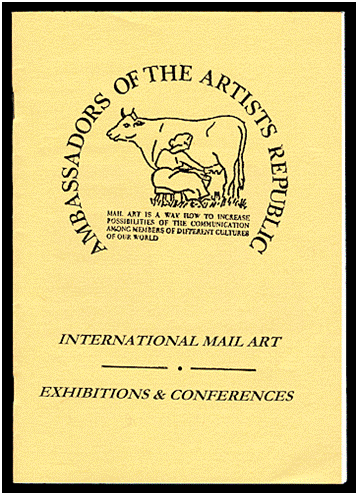
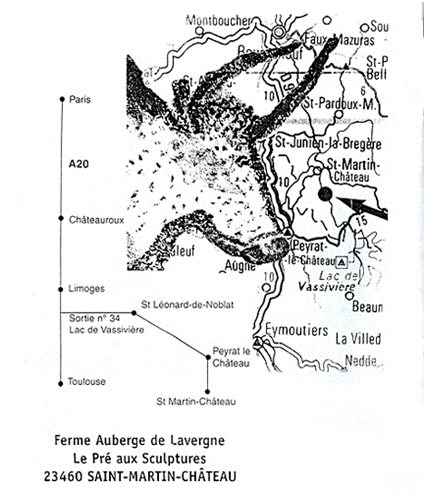

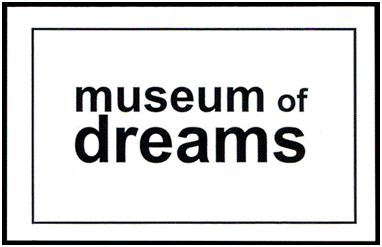
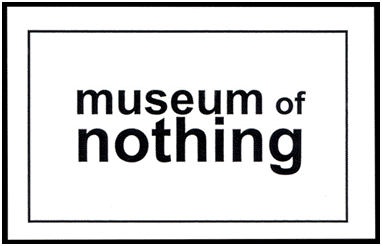


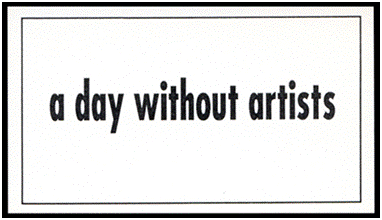
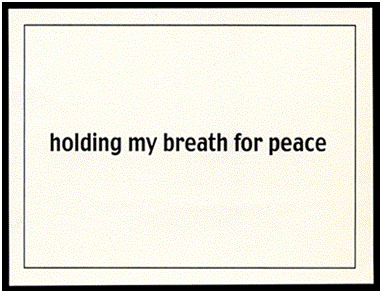


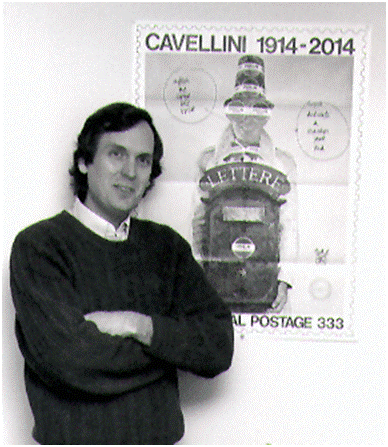




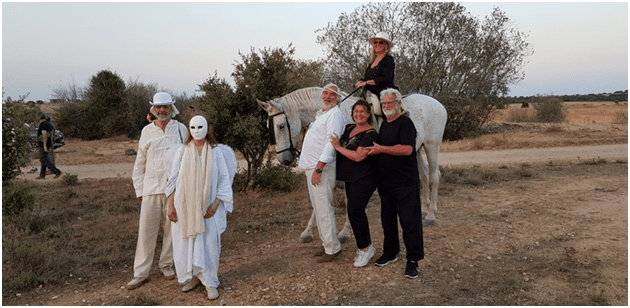




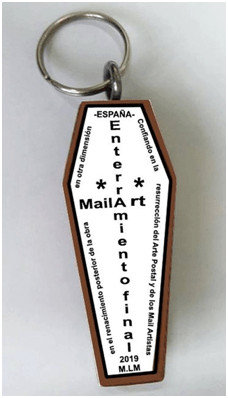
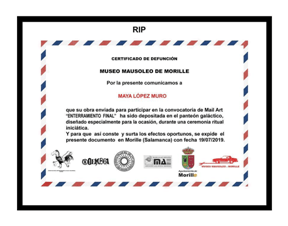




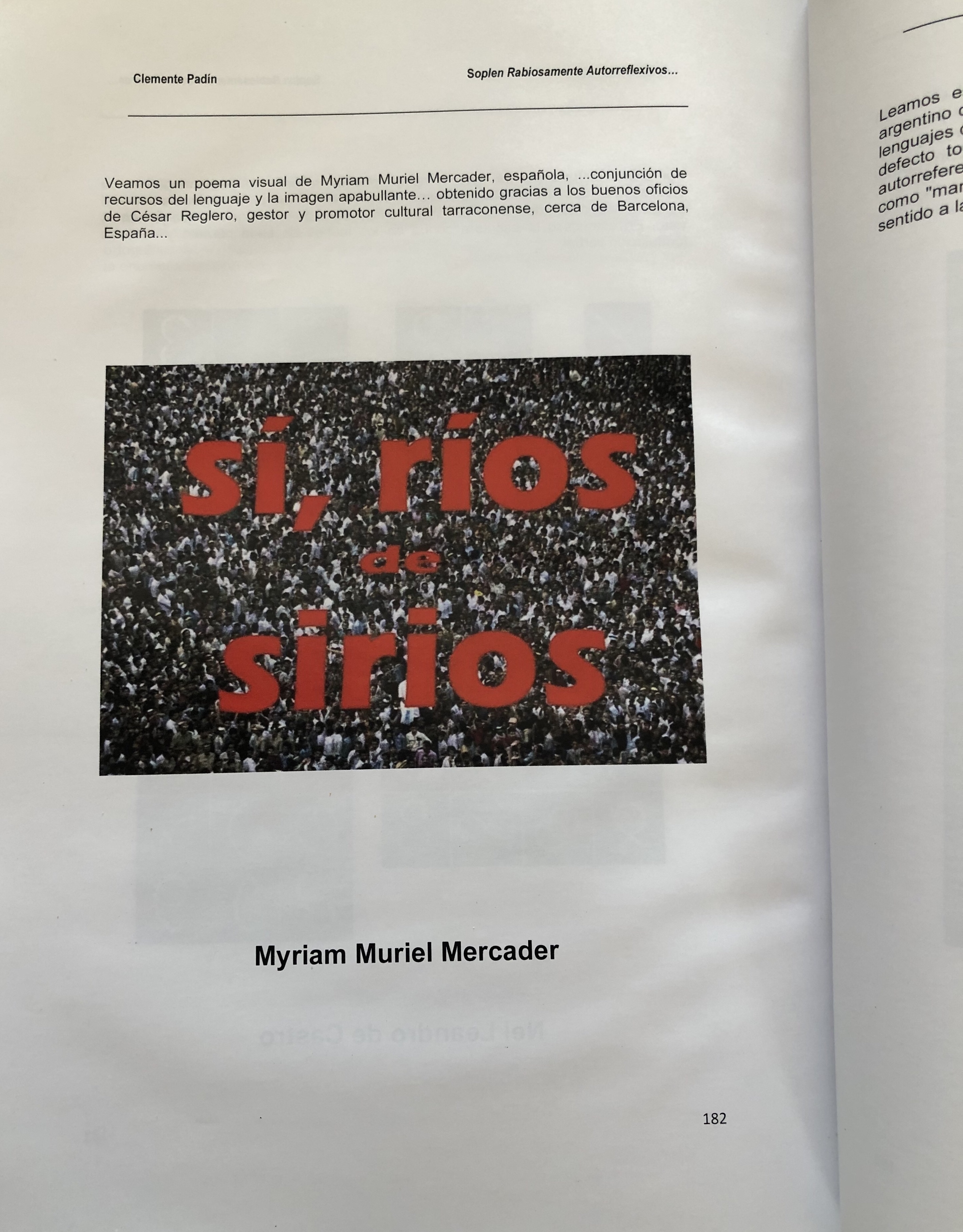
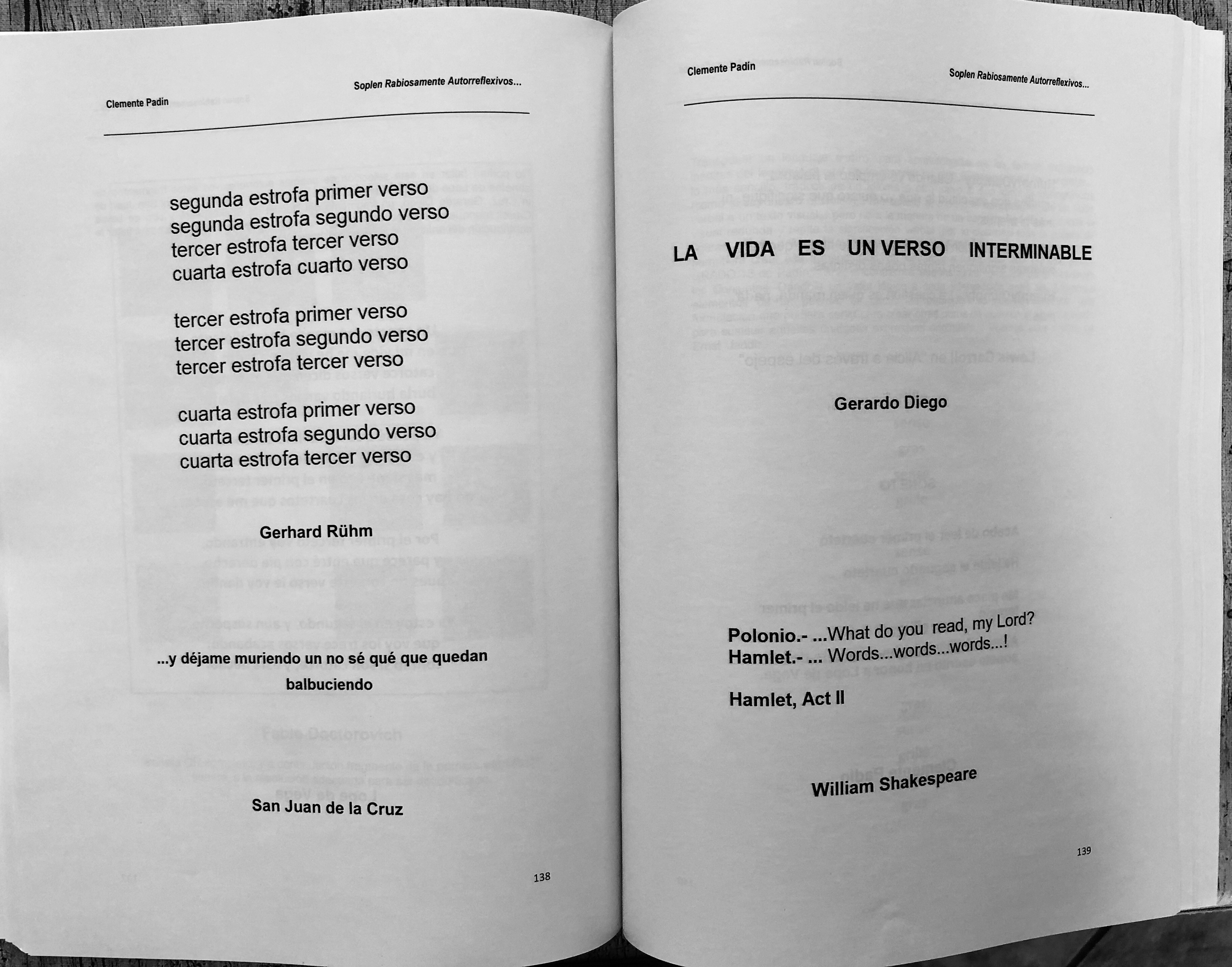
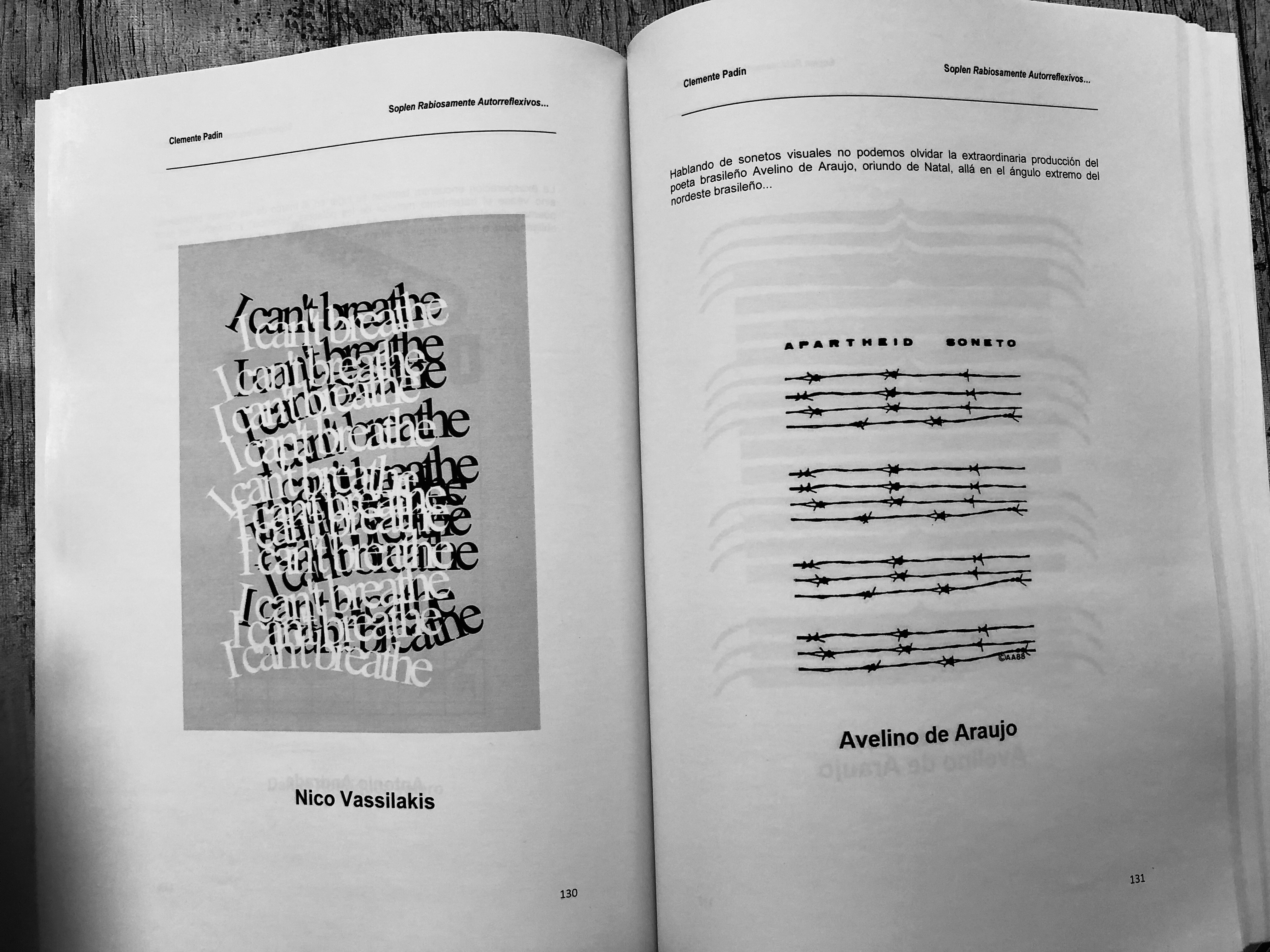

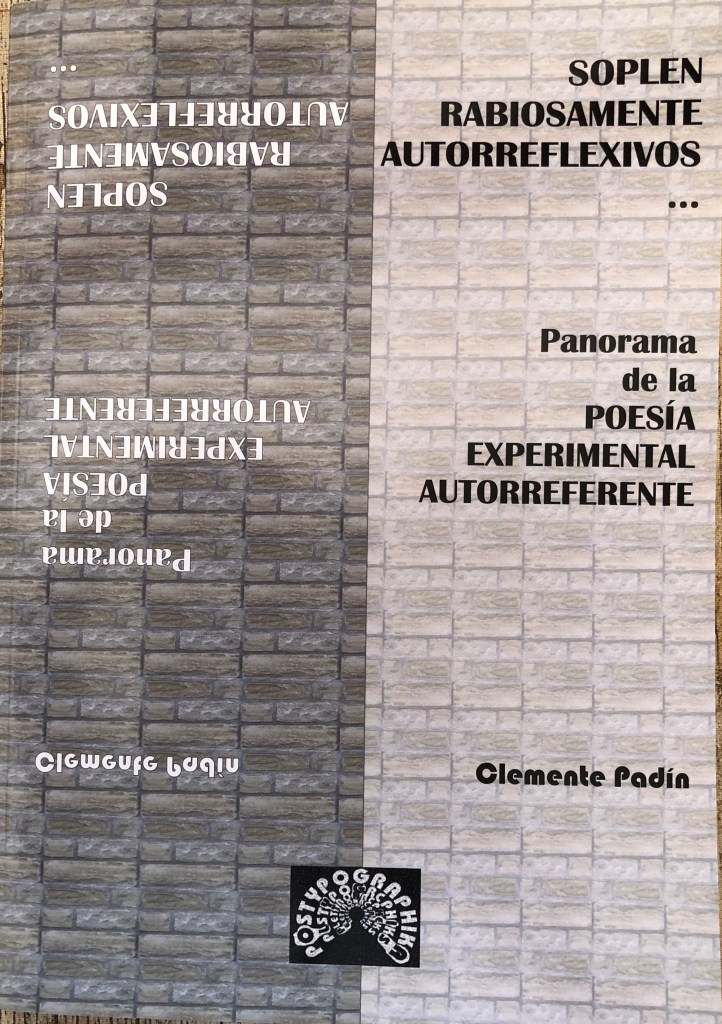


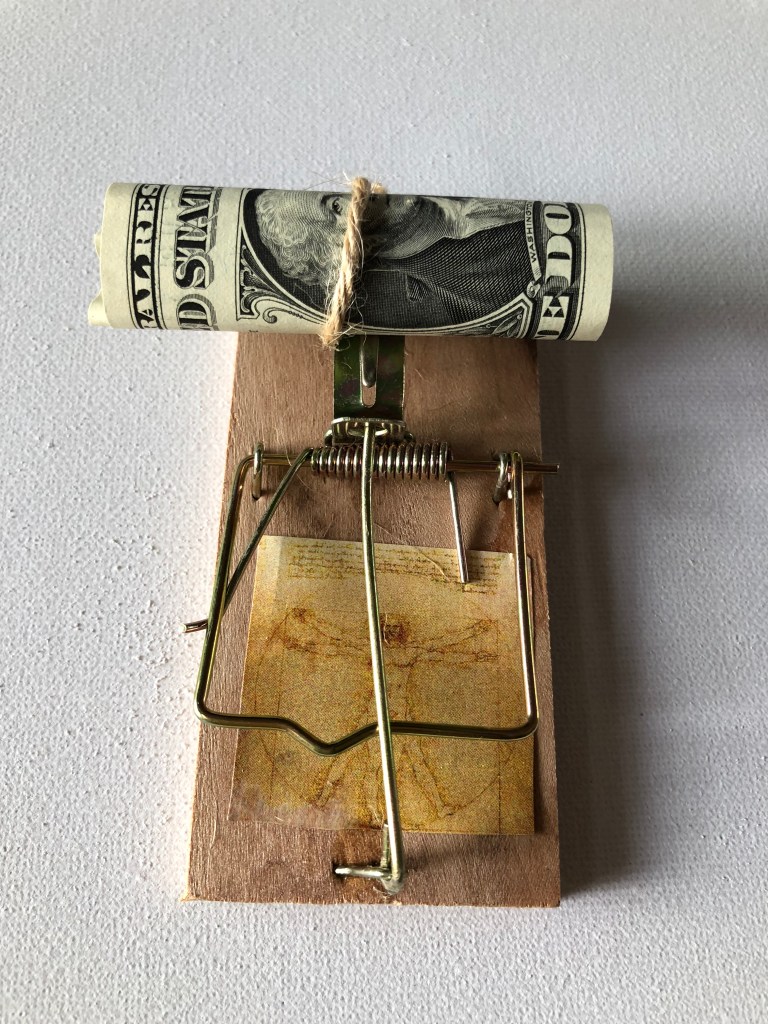
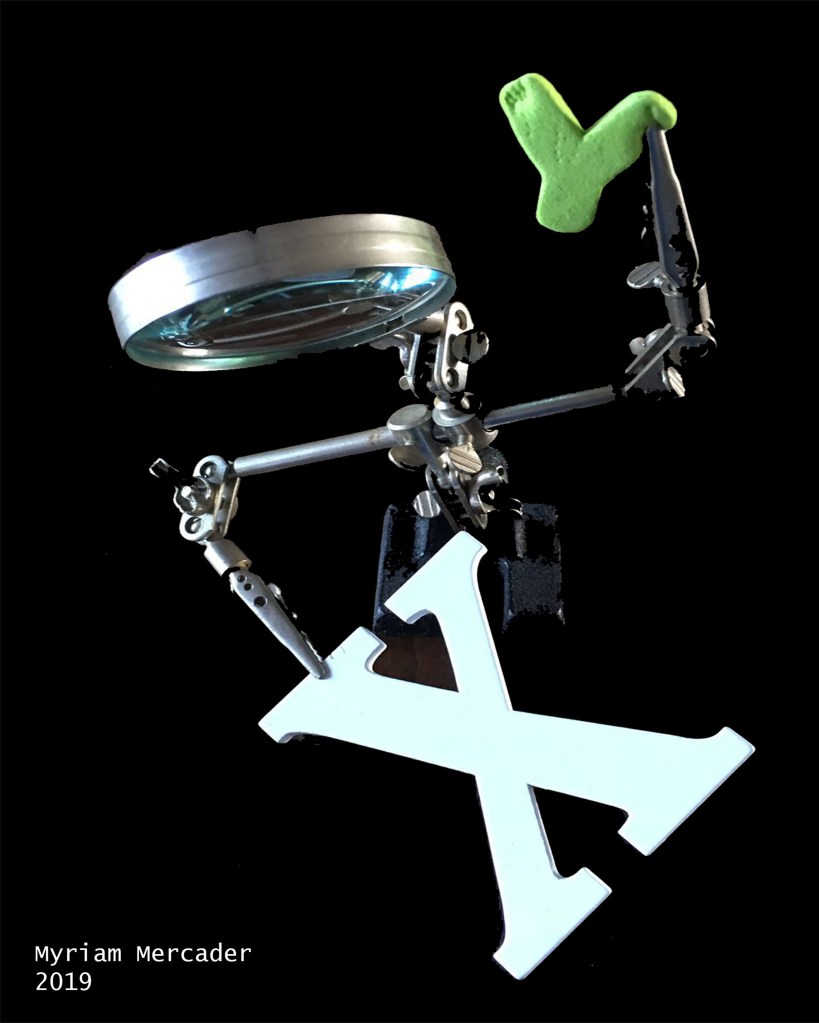








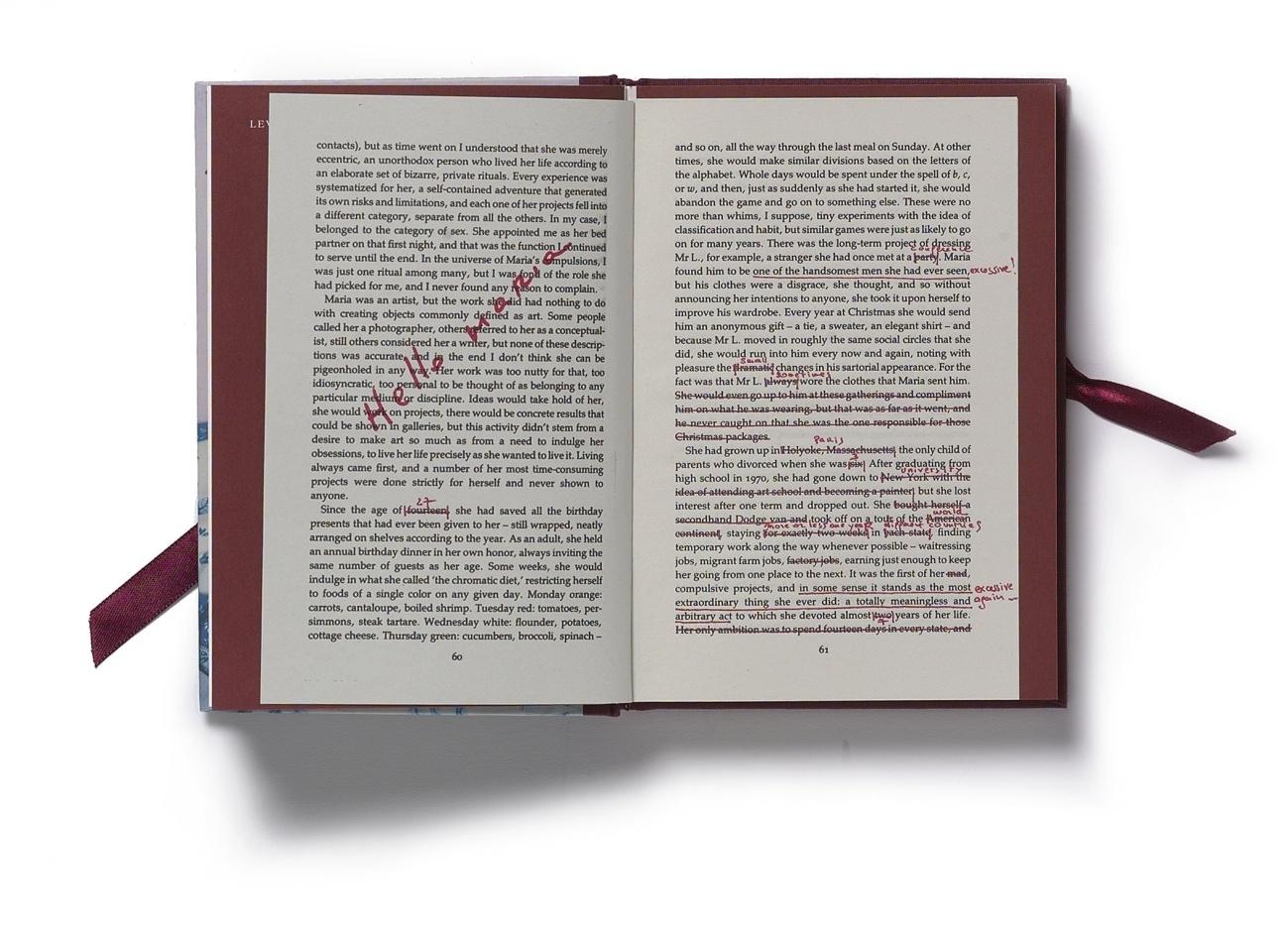


 El blog de Myriam M. Mercader